
Academy SITREP – Iran Continues to Threaten the Strait of Hormuz
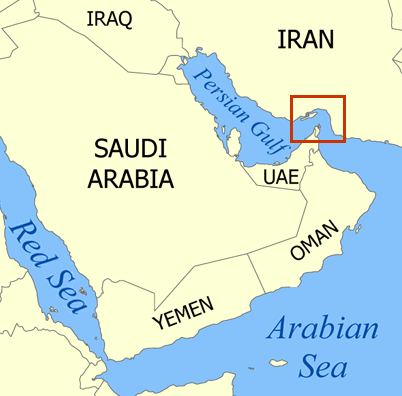
What has Happened:
- This morning, Iranian state media reported that Mojtaba Khamenei had released his first written statement as supreme leader, vowing that Iran would continue to block the Strait of Hormuz.
- The International Energy Agency said the world is facing the “largest supply disruption in the history of the global oil market” as Iran continues to attack ships and oil prices remain elevated.
- The conflict forced the closures of oil terminals in Iraq and Oman today, as oil shipments came under increasing threats from attacks on depots, refineries, ports, and ships.
- The U.S. has said that it is not yet ready to commence escort operations as it is too risky to send warships into the confined waters of the Strait (21 miles wide at its narrowest point) until the risks of Iranian attack have receded.
- Each tanker might need to be escorted by two destroyers to cover the risk of incoming threats from Iran’s coast and small islands nearby.
- Iranian missile attacks have fallen by over 90% since the war’s first day and U.S. and Israeli officials claimed a reduction of over 80% in Iran’s drone launches.
- Meanwhile, Iran-backed Hezbollah in Lebanon continues to fire missiles at Israel, and Israel has targeted Hezbollah sites with hundreds of strikes as it expands operations.
Why it Matters:
“The Islamic Republic is highly motivated to disrupt shipping in the Gulf for several reasons. First, because Iran is diplomatically isolated and militarily overmatched, its principal source of leverage is an ability to threaten maritime traffic through the Strait. Demonstrating that commercial shipping faces credible risks allows Tehran to impose economic costs well beyond the battlefield. Second, I think Iran and the United States are operating on very different time horizons. The U.S. is pursuing an aggressive bombing campaign in hopes of a swift and decisive end to the conflict. Tehran, on the other hand, may think that prolonging disruptions to energy markets increases international economic pressure, potentially encouraging calls for a ceasefire or negotiations before Iran’s military position deteriorates further.
Naval escort operations are feasible and historically proven, but we can’t bring them together overnight. Even if the United States leads such efforts (as we’ve done in previous Gulf crises), there are many practical issues to resolve. Escort missions require ships, aircraft, command-and-control arrangements, and coordination with commercial shipping and allied navies. In addition, the current threat environment – drones, potential mines, and small-boat attacks – means escort operations must suppress or mitigate all of those risks. A multinational escort framework also raises numerous legal, operational, and financial issues. For instance, who pays to escort a Liberian-flagged tanker of Qatari LNG bound for China? Determining how escorts are prioritized, how commercial shipping participates, and how the costs and risks are shared among nations and ship operators will take time to coordinate. This can be done and I assume that it will be, but we can’t pull it together overnight.” – General Karen Gibson
“I agree with Karen that Iran’s principal leverage is through economic disruption, not just shutting down the Strait of Hormuz but also damaging economic infrastructure linked to energy, tourism, and transport across the Gulf region. Iran appears to still have sufficient drones and missiles, and is using these capabilities judiciously to conduct attacks. Yesterday’s strikes appeared synchronized and employed ballistic missiles, long-range drones, proxy rocket attacks, and maritime harassment. Iran is banking on the U.S. seeking an off-ramp from the hostilities to resolve the economic pressures. Trump’s vacillation on the length of the war encourages this approach. Naval escort operations are not feasible until more Iranian naval capabilities have been destroyed, or ships/aircraft can be made available in sufficient numbers to mitigate these threats during transits. We will likely see more Iranian sponsored cyber-attacks. This is another avenue for Iran to widen the impact of the war.” – Admiral Kelly Aeschbach
“From Tehran’s perspective, the Strait of Hormuz is one of the biggest cards to play. Iran does not need to close the Strait to achieve its aims. Even intermittent disruption or credible threats to shipping can raise insurance rates, slow traffic, and inject volatility into energy markets. I expect uneven and unpredictable activity designed to sustain that uncertainty. The asymmetric dimension is significant and may grow as conventional capabilities degrade. Iran has long relied on actions that generate outsized psychological and economic effects relative to their scale. Maritime harassment, drones, mines, proxies, and cyber-activity remain core tools. Even the hint of disruption can gain traction quickly, as seen with concerns around infrastructure nodes in California and the natural attention security services will place on large public events.
The operational security surrounding the new Supreme Leader will likely tighten considerably, complicating intelligence collection and making any further regime targeting more difficult. So, the situation may remain this way for a period of time. Two ‘longer-term’ (meaning not right now) issues also bear watching. First is the outstanding question of nuclear materials and the status and location of key elements of Iran’s program. Second, infrastructure targeting in the energy sector carries the risk of significant environmental damage in the Gulf, which could become a broader international concern over time. For markets, the key signal will be changes in shipping behavior. Rising war risk premiums, tanker rerouting, or hesitation by operators would indicate Iran’s disruption strategy is beginning to have real economic impact.” – Shelby Pierson, Former Director of Analysis, National Geospatial-Intelligence Agency
“This phase of our military confrontation with Iran will, on the U.S. side, involve patience to see through political and military objectives vs. endurance on the Iranian side. For the Iranian regime this is an existential fight, and it is calculating that it may be able to outlast the U.S.’s patience to accomplish its objectives. The only way for Iran to fight back is by increasing pressure on global economic markets by disruptions to key industries in the Gulf: oil, gas, shipping, tourism, and finance. They continue to have at least limited capabilities to accomplish these objectives. Iran’s calculus is that sustained pressure in this regard, if only to create uncertainty with respect to normalization of shipping and resumption of full-scale oil/gas production, will increase global pressure on the U.S. to declare a cessation of military operations sooner rather than later.
It is also important that we remain laser-focused on other Iranian asymmetric capabilities such as cyber disruptions and acts of terrorism. Cyber disruption could include targeting key U.S. industries with disruption of service attacks and to a lesser extent website defacements. We are already seeing an uptick in likely terrorist activity that may not even be at the direction of Iran. There are copycats and lone wolves who may be eager to take advantage of the current hostilities to make their mark via terrorist or violent activity. It is critical that organizations not present themselves as soft targets. Heightening the physical and cyber security profile at commercial establishments will be important to, at the very least, create the impression of attentiveness to security.” – Joe Zacks, Former CIA Deputy Assistant Director for Counterterrorism
“The situation in the Persian Gulf region continues to be a high-stakes endurance contest. The U.S. and allies are applying massive military pressure in an attempt either to collapse the Tehran regime or to force it into substantial concessions. Iran, on the other hand, will attempt to keep its leadership, security services, and key military capabilities functional long enough for economic and diplomatic pressure to force the U.S. to back off. I agree that economic disruption is the principal, and I would argue the only, meaningful lever Iran has at its disposal. Attacks on shipping, reports of naval mining, and attacks against energy infrastructure are all aimed at creating and sustaining this disruption. The markets will deem Iran capable of controlling maritime traffic through the Strait of Hormuz until it is convincingly demonstrated otherwise. Saudi Arabia operates substantial bypass pipeline capacity from the Persian Gulf to the Red Sea port of Yanbu. If the Houthis decide to engage, Red Sea security will also be a factor. In addition to economic disruption, Iran may also conduct additional rocket/drone attacks on U.S./allied military forces in the region and asymmetric terrorist/cyber-attacks farther afield but, in my view, they will not be compelling. Indeed, Iran might further harden its adversaries’ positions. Diplomatically, Iran has shown little inclination to submit being, outwardly at least, confident in its ability to outlast U.S. pressure.
Militarily, the U.S. and allies will continue to focus on dismantling Iranian nuclear and weapons production infrastructure, as well as in achieving greater control over the Strait of Hormuz. Iran must continue some level of missile/drone attacks in the region and target ships transiting the Strait in order to demonstrate that it retains the capacity to exert itself. Despite the practical and legal difficulties, I think that the administration will try to get some traffic moving through the Strait as quickly as it can in order to challenge the Iranian narrative that it is in control. Internal opposition to the regime is still not apparent, which makes regime change increasingly unlikely. Absent regime change, the endgame, when it comes, will involve some kind of negotiation with the current regime. Who has the upper hand will depend on who wins the endurance contest. In my mind, the minimum acceptable U.S. outcome is an Iran which has no viable nuclear program, whose offensive capabilities are destroyed, whose military production capacity is dismantled, and who cannot pose a credible threat to the Strait of Hormuz. That can be militarily achieved but it takes time to do it. Economic disruption or not, I think this conflict has some weeks left to go.” – Neil Wiley, Former Principal Executive, Office of the Director of National Intelligence
“We are rightly talking about the importance of the Strait of Hormuz, but we need to also keep an eye on the Bab el-Mandeb. The Houthis have been eerily quiet so far. Should they decide to once again start menacing shipping on the Red Sea, insurers will be facing a double whammy. The Houthis have never been Iranian puppets, but they will be loath to see a Middle East in which Saudi Arabia and Israel are unchecked power brokers.” – Linda Weissgold, Former CIA Deputy Director for Analysis
“I am increasingly worried about the problems arising from both production cuts and shipments of a variety of products out of the Middle East. We discussed some of these issues last Friday (see Plastics T-Report). While it is very complex, I think I can summarize my concerns as follows:
- Asia (ex-China) and Europe are more exposed than the U.S. The impact will be felt more acutely and quickly in those regions (back to our ‘force majeure’ comments).
- LNG, along with diesel and jet fuel, is a major concern for me. LNG is not quite as ‘fungible’ as oil, and refined products are more important, and more difficult to adjust for, than oil itself.
- Fertilizer is another area of concern, where the impact of shortages (and cost) will be felt in the future.
- Facilities being shut down take time to turn back on. Chemical engineering facilities (which are very applicable to oil, energy, and chemicals themselves) are notoriously slow to ramp up to full production. You do not just ‘flip a switch.’ There is a process that is often complex and slow to ramp up to full production. We are starting to move to the phase that even once things are a ‘go’ in the Strait, it could be 2 to 3 weeks before production and processing is back to full speed.
- Humanitarian efforts for the Middle East may be required if food and/or water disruptions continue or grow.
What is the timing?
- If we are still discussing the Strait not being open for vessels, or if it is actually closed (mines, rocket/drone attacks, etc.) by the end of next week, I think we will have triggered problems down the road, no matter what happens in the Strait after that.” – Peter Tchir, Academy Securities Head of Macro Strategy