
Around the World with Academy Securities
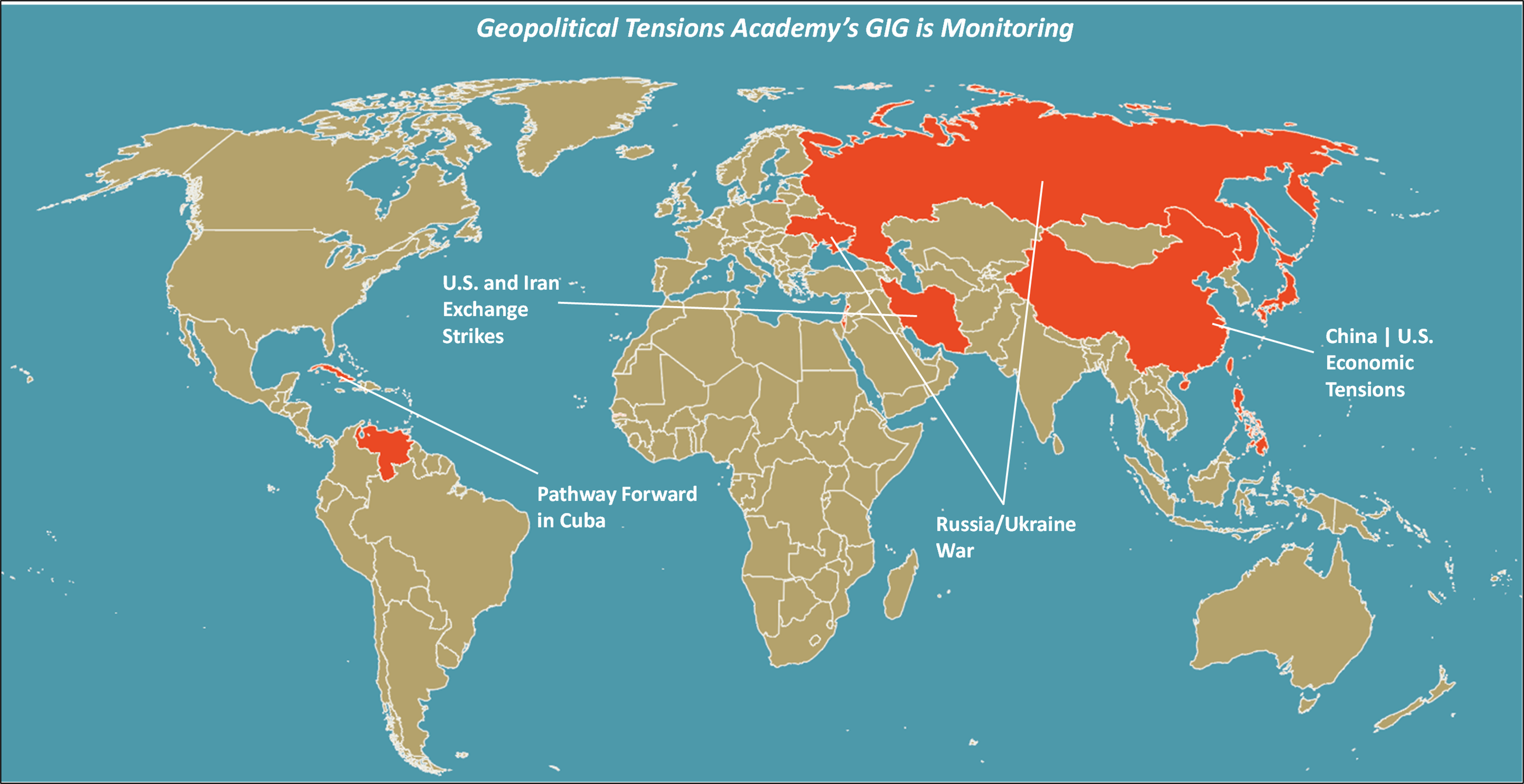
In this month’s edition of Around the World with Academy Securities, our Geopolitical Intelligence Group (GIG) focuses on the following geopolitical tensions that we are monitoring:
- U.S. and Iran Exchange Strikes
- Pathway Forward in Cuba
- Russia/Ukraine War
- China | U.S. Economic Tensions
We begin this report with an update on the MOU signing, which was followed by an exchange of strikes by the U.S. and Iran after an attack on commercial shipping in the Strait. While there was some level of optimism following the beginning of talks in Switzerland, we continue to be in a very tense period as Iran tries to maximize its leverage over the Strait, while the U.S. responds with strikes and threatens to finish the job in Iran militarily if progress is not made during the 60-day negotiation period. While both sides have agreed to “stand down for now,” in advance of the talks continuing in Qatar, the situation is far from resolved. Next, we revisit Cuba and the deteriorating economic situation on the island. With Mexico offering to re-start fuel shipments, China providing humanitarian aid, and Cuba enacting market reforms aimed at supporting its failing economy, the question becomes how long they can continue to hold out until the pressure drives the regime to make a decision: make changes to its leadership satisfactory to the U.S. or risk a complete implosion and subsequent crisis. We also provide an update on the war in Ukraine as the Ukrainian military continues to strike further into Russia and Crimea, not only embarrassing Putin, but also making a significant impact on Russia’s fuel supply and ability to support the war effort. While there has been some chatter about Putin pushing Belarus to take a larger role in the war, it remains unlikely at this time because Ukraine would take the war to Belarus directly and target sites within the country potentially resulting in destabilization. Finally, we cover the recent economic tensions between China and the U.S. While measured at this time, they still demonstrate an uneasy trade truce between the two nations.
Please reach out to your Academy coverage officer with any questions and we would be happy to engage.
Front and Center: U.S. and Iran Exchange Strikes
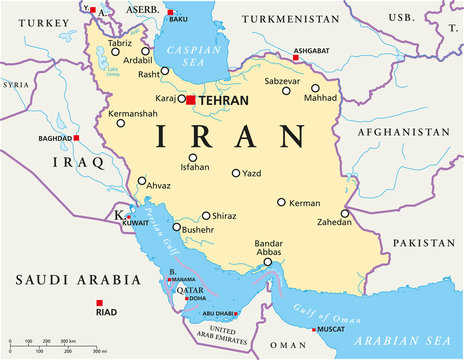 As we reported in our SITREPs and podcasts, the U.S. and Iran executed the MOU and are now in the 60-day phase of nuclear talks. Per the MOU, the U.S. lifted its naval blockade and Iran agreed to open the Strait. Delegations met in Switzerland last week and talks are expected to continue this week. While there is some degree of optimism and Trump said that Iran “wants to make a deal very badly,” there is no guarantee that these talks will lead to a new nuclear deal that allows for the highly intrusive inspections desired by the U.S., the handing over of the highly enriched uranium, and a formal pledge in a final deal for Iran not to build or acquire a nuclear weapon. The nuclear piece remains contested: the U.S. says Iran agreed to IAEA inspections, while Iran says it made no new commitments. Regarding the continued tensions between Israel and Hezbollah in Lebanon, as neither side is a party to the MOU, the real test will be to see what kind of leverage the U.S. and Iran have over Israel and Hezbollah, respectively. In addition, Iran’s President has been equally firm that missiles are not part of the MOU and never will be. Future funding of proxy forces is also not a line item in the MOU, so the question regarding how Iran will spend the money brought in via oil sales following the lifting of sanctions for 60 days (in addition to any use of funds made available from the unfreezing of assets held internationally) will be a major negotiating point. Secretary Rubio spoke with allies last week about future administration of the Strait, and Iran and Oman are separately talking about their role moving forward. However, Iran continues to threaten shipping and is gambling that the use of force will result in additional leverage during the negotiations. Iran fired at least four one-way attack drones at ships in the Strait last Thursday — one damaged a cargo ship, three were shot down — which Trump called a “foolish violation” of the ceasefire. Fighting continued over the weekend with Iranian strikes against another commercial ship in the Strait, and then on Bahrain and Kuwait following additional U.S. strikes on Iranian coastal facilities. While both sides agreed to “stand down for now,” the small-scale confrontations will likely continue, even while discussions are taking place. Bottom line is that we are likely in a “new normal” in the region, and will have to maintain a force presence that can both strike targets in Iran if there are further ceasefire violations, and reimpose the blockade if it becomes clear that talks have broken down. There is also no easy answer to the fighting in Lebanon as Israel has made it clear that Hezbollah is still a threat.
“The current situation reflects a ceasefire rather than a lasting peace, with core drivers of the conflict still unresolved. While there have been signs of progress—including discussions on inspections, communication mechanisms for the Strait of Hormuz, and de-confliction channels in Lebanon—the core disputes that led to the conflict have not been resolved. The negotiations remain vulnerable to renewed fighting involving Hezbollah, Israeli military operations in Lebanon, or another disruption in the Strait. The proposed MOU falls short of initial U.S. objectives, which included curbing Iran’s missile program, halting support for proxy groups, removing enriched uranium, and ensuring free passage through the Strait. Domestic political considerations, particularly upcoming midterm elections, appear to be shaping the administration’s approach. Accepting a limited agreement may help stabilize energy prices in the near term, even if compliance remains uncertain and periodic retaliatory actions continue. The most likely outcome over the next year is a fragile equilibrium—avoiding full-scale war without achieving true peace. For investors, energy security remains the key concern, with the stability of the Strait serving as a primary indicator of risk followed by implementation of inspection agreements, movement on sanctions relief, and whether regional actors support or undermine the diplomatic track.” – General Robert Walsh
“Iran’s behavior may seem perplexing but is predictable in light of the desperation faced by the current leadership regime. The strikes on Bahrain in hopes of scoring a pyrrhic win against the U.S. Navy’s 5th Fleet is just the latest in a series of responses driven principally by pride and frustration. Over the past two years Iran has watched Hamas devastated, Hezbollah badly crippled, the Assad regime (their illicit money machine in the region) deposed, and their Arab neighbors increasingly welcome American and European economic partnerships throughout the region. They would have the world believe that the fragile leadership structure built upon the Khamenei cult of personality over the last 36 years has been recrafted and reinvigorated – this is far from true. While the IRGC still maintains firm control of governance, security, and economic functions, Iran struggles to read the room (whether through fear or inexperience). They continue to labor under the belief that holding the Strait at risk will compel the Trump administration to grant concessions that are unrealistic. Remarkably, the Trump administration is more willing than any administration since the revolution to welcome Iran back to a world order that would result in more prosperity and economic growth for the Middle East. Part politics and part religious adherence, Iran’s decision making lacks a pragmatism that could benefit them, their people, and the current regime. I see no signs that they will depart from the current course – hyperbolic rhetoric and limited military strikes to demonstrate their (waning) capability. If the Strait opens again, conditions for continued operation will hinge upon a fragile framework that enables Iran to quickly reverse course when conditions suit its purpose. There are, in my mind, only two courses of action that can reverse Iran’s current path: 1) more crippling sanctions which will almost certainly exacerbate the humanitarian crisis for the Iranian people, 2) boots on the ground to eradicate the IRGC and current regime (an expensive and unrealistic course of action). I am, regrettably, pessimistic that the 60-day framework will produce a lasting solution to the situation in the Strait.” – General John Evans
“The uptick last week in ships transiting the Strait of Hormuz by following a shipping lane close to the Omani coast, outside the Iranian-mandated northern route, was perceived by the Iranian regime as a direct threat to its core demand to control all ship traffic through the Strait. The series of drone attacks on vessels near the coast of Oman by the Islamic Revolutionary Guards Corps (IRGC) navy was a clear attempt by the Iranian regime to assert its claim of sovereignty over the Strait. The Iranian regime views control of the Strait as providing critical leverage over their Gulf neighbors, while the charging of tolls or other fees on ships to transit the Strait creates a valuable protection racket that provides the IRGC with revenue to support its repression internally and its proxies externally. Following the U.S. response to the Iranian attack, it is becoming increasingly likely that reestablishing the free flow of shipping through the Strait of Hormuz will be one of the most difficult aspects of maintaining the Memorandum of Understanding. A continuing low-level conflict in the Strait also provides an excuse for Iran to slow-roll negotiations on nuclear issues. A commitment by the European powers during the upcoming NATO Summit to assist in clearing mines from the center of the Strait would be a favorable development.” – General Tom Bouchard
“Iran shows no willingness nor capability to control Hezbollah. Therefore, we should expect Hezbollah to continue attacking, and Israel continuing to respond. For Hormuz, the test will be the throughput using either the IRGC-controlled routes to the north or the U.S.-guarded route that hugs the Omani coast to the south. Pre-war, about 15 million barrels of crude per day passed through. Of that 1.9 million barrels were Iranian. A Very Large Crude Carrier (VLCC) can carry as much as 2 million barrels, so the crude trade could be restored with as few as 8 outbound ships per day. The Iranian crude sales to China could be shipped on a single VLCC. This ought to be easy to track to test whether Hormuz is open. At this moment, all we have is a deal to negotiate a deal, and the IRGC still seems to be a wild card. Expect this to drag on as the key nuclear issue gets worked.” – General Rick Waddell
“It will be difficult to make progress in talks related to Iran’s nuclear program while the situation in the Gulf remains so volatile. And on that note, last week’s unprovoked attack against a commercial vessel in the Strait should put to bed any notions that Iran has been negotiating in good faith. At this point, they have no intention of agreeing to terms that are not favorable to them, whether we’re talking about inspections of their nuclear program, management of the Strait, or any other facet of the MOU. Returning frozen Iranian assets is an enticing incentive, but I suspect we will need to apply additional pressure to get the concessions we need. It’s in Iran’s favor to tie Israel’s campaign against Hezbollah to our own talks because that conflict is so intractable. Binding the two issues could provide Iran with a lever to slow, suspend, or complicate talks about their nuclear program or other matters. Iran wields substantial influence over Hezbollah, which increasingly relies on Tehran for financing and material support, but Hezbollah has its own leadership and operational interests. In short, while their objectives are deeply aligned, Hezbollah is not entirely controlled by Iran. Neither is Israel an American proxy. The nation state values its partnership with the U.S. above any other, and Washington has significant influence over its decisions, but when Israeli leaders believe an issue touches the country’s very survival – specifically the threat posed by Hezbollah – they will ultimately act according to their own assessment of Israel’s security interests. It’s been heartening to see the significant uptick in traffic through the Strait, but Iran’s attacks of last week were not helpful in terms of restoring commercial confidence. Shipping companies and their insurers want to see that safe transits are routine, not episodic. Regardless of how this campaign ends, if Iran retains an ability and willingness to threaten traffic, it’s unlikely the waterway will operate in the same way, under the same conditions of risk, that we enjoyed in 2025.” – General Karen Gibson
“Ceasefires are a state of mind. They are almost never a cessation of violence and what is deemed politically acceptable can change. Iran understands this and is banking on both a strong U.S. desire to perpetuate the ceasefire and the private sector’s skittishness to enhance its leverage. It is willing and able to absorb proportional strikes to maintain what it now perceives as its biggest bargaining chips—an ability to impact shipping flows in the Strait of Hormuz and the cost of gasoline at U.S. pumps. Iran is also counting on differing applications of ceasefire acceptability. They assess that hitting Singaporean and Panamanian-flagged ships or striking targets in Kuwait and Bahrain won’t engender the same response as killing U.S. military members. They see no irony in requiring a stricter interpretation of a ceasefire between Israel and Hizballah than they are implementing themselves, and they are counting on the rest of the world seeing it that way as well. Israeli Prime Minister Netanyahu, who promised that this round of violence with Hizballah and Tehran would end only with a definitive victory that resulted in lasting security, will almost certainly be forced to eat those words, even as he prepares for elections in the fall. Relatedly, he may change the threshold for the ceasefire in Gaza and turn up the heat in that conflict to try to maintain his security credentials. Increased settler violence in the West Bank is also a high likelihood and a ripple effect of the Iranian ceasefire variables.” – Linda Weissgold, Former CIA Deputy Director for Analysis
“The most likely outcome is a period of managed instability rather than lasting de-escalation. Neither Tehran nor Washington appears interested in a major regional war, but both have incentives to preserve leverage while avoiding direct confrontation. That means negotiations are likely to continue alongside periodic proxy attacks, sanctions evasion, maritime harassment, cyber activity, and information operations. The Strait of Hormuz is unlikely to close outright because doing so would invite an overwhelming international response and undercut Iran’s own interests. Instead, Tehran is more likely to use ambiguity and selective disruption to increase shipping costs, create market uncertainty, and maintain negotiating leverage without crossing a threshold that triggers a broader military response. The earliest indicators will not come from diplomatic statements. They will come from commercial behavior. Watch insurance premiums, shipping routes, AIS anomalies, satellite-observed port activity, and regional energy flows. Those indicators will tell us whether the region is genuinely stabilizing or simply settling into a lower-intensity competition.” – Shelby Pierson, Former Director of Analysis, National Geospatial-Intelligence Agency
“Despite recent exchange of fire between the United States and Iran, the United States will do everything in its power to continue implementing the Memorandum of Understanding with Iran. This is especially the case with mid-term elections looming and a reluctance to upset the recent respite in gas prices as a result of the recently implemented MOU. Upon signing the MOU, the U.S. was quick to implement a number of significant economic concessions (i.e., the issuance of OFAC General License X that provides broad authorization for parties to purchase and resell Iranian crude oil, petrochemical, and petroleum products) while Iran’s primary obligation—verified nuclear status quo plus Hormuz Strait defining and reopening—is ongoing and contested. The hardline elements of the Iranian regime are likely emboldened by the MOU and a perception that the U.S. administration wants to put the conflict with Iran in the rearview mirror. They will continue to push the U.S. with respect to control over the Strait of Hormuz in order to gain financial benefits and exert control and influence in the Gulf. The regime will discount harsh rhetoric from the U.S. administration as unlikely to be followed up with intensive military action. And the regime will continue to bolster its support for Lebanese Hezbollah to both ensure that the U.S. ultimately accedes to Iran’s continued support for proxy forces and as a convenient escape valve for its incomplete implementation of the MOU. The U.S. will push to keep the diplomatic track associated with the MOU alive. The U.S. will likely continue to repeatedly extend the initial 60-day window for reaching a final agreement in order to prevent a resumption of large-scale military operations against Iran, especially as we get closer to the November elections. The Iranian regime understands this and will use the U.S.’s hesitance to abandon the MOU to its benefit.” – Joe Zacks, Former CIA Deputy Assistant Director for Counterterrorism
Pathway Forward in Cuba
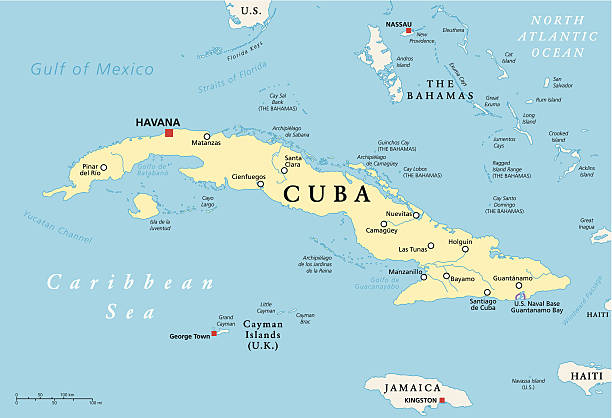
As we addressed in our previous ATW, the economic pressure campaign against Cuba continues to slowly grind the economy to a halt. Cuba has run out of oil and diesel, infant mortality has risen, food production is down 60%, and medicine is available at only 30% of normal supply. The U.S. is keeping the pressure on — Secretary Rubio just sanctioned five Cuban entities, including three linked to GAESA, the military-run conglomerate that controls roughly 40% of Cuba’s GDP. In response to the pressure, the Cuban government recently announced a sweeping economic restructuring. The package of 176 measures would allow more private enterprise and loosen the Cuban government’s grip on the island’s economic activity. However, a move toward a system like those in place in Vietnam or China, away from a strictly state-controlled, centrally planned economy toward a flexible, market-driven mixed economy, would be hard to pull off unless the Trump administration eases sanctions. Cuba has been quietly talking to Washington — Díaz-Canel confirmed in March that negotiations were underway, and Cuba released over 2,000 prisoners as a gesture — but there are no imminent signs of changes within the regime, which is a clear goal of the Trump administration. Timing of any actions by the U.S. is also unclear, but signs continue to point to something driving an outcome favorable to the U.S. at some point later this year.
“U.S. policy toward Cuba appears to be entering a phase of heightened pressure, reflecting concerns that extend beyond a purely bilateral relationship. Cuba is increasingly viewed as a strategic foothold for adversarial actors—including Russia, China, and Iran—operating close to the United States. In response, the U.S. has intensified efforts to constrain Cuba’s access to critical economic lifelines, including fuel supplies, international financial systems, and foreign investment. Recent sanctions underscore the continuation of this approach, targeting entities linked to Cuba’s military-controlled economy as well as members of the Castro family. These measures signal a sustained campaign aimed at expanding economic pressure on the regime. The result is Cuba is experiencing one of its most severe economic crises since the collapse of the Soviet Union, compounded by repeated nationwide failures of its electrical grid. These conditions have contributed to rising public frustration and heightened domestic strain. Historically, the Cuban government has demonstrated resilience under external pressure, typically prioritizing economic adaptation over political reform. Current indications suggest a similar pattern: the regime appears to be pursuing limited economic reforms designed to alleviate immediate pressures while preserving political control. These efforts reflect recognition of the crisis’s severity without signaling a willingness to undertake fundamental political change.” – General Robert Walsh
“The U.S. will continue to ramp up pressure, and the Cuban regime will continue to make as few incremental (cosmetic) changes as possible. Outstanding claims from the confiscations of the early 1960s have been and will continue to be a major U.S. sticking point without easy diplomatic resolution. Incremental changes to allow private investment are hard to credit as long as the regime stays in place, because such changes rely on the trustworthiness of the same regime that created the problems. As pressure slowly builds, significant change is unlikely before the U.S. midterms.” – General Rick Waddell
“The long-term U.S. sanctions and the Cuban government’s mismanagement have put the Cuban economy into a downward spiral from which it is unlikely to recover without significant intervention. Current levels of outside support, including fuel from Mexico and humanitarian aid from China, along with marginal free-market reforms by the government, will likely, at best, slightly slow the economic meltdown. In evaluating the situation, the U.S. administration should be very wary of conditions that could cause the Cuban economy to hit an inflection point, where a humanitarian crisis unfolds, followed by a breakdown of the rule of law. Such a scenario would likely require a costly intervention by the U.S. to help mitigate embarrassing, Haiti-like human suffering among a population that has strong family ties to a politically powerful diaspora in the U.S. I don’t believe this scenario is likely to play out before the fall elections. However, there needs to be increasing emphasis on incentivizing Cuba’s current leaders to depart while establishing a framework for economic stabilization in Cuba.” – General Tom Bouchard
“Cuba is under real pressure, but economic distress does not automatically produce regime change. Havana’s market reforms—more space for private business, imports and exports, private hiring, private banks, and investment by Cubans abroad—look more like survival measures than true political liberalization. U.S. pressure is tightening, especially after the Supreme Court allowed Exxon to proceed with litigation over property confiscated after Castro took power. The practical effect is to increase financial pressure on already stressed Cuban state entities. I would frame U.S. policy as accelerating pressure to force the regime into a choice: real structural change or deeper crisis. But Havana will try to split the difference—accepting Chinese humanitarian aid, seeking Mexican fuel support, and allowing limited reforms while preserving Communist Party control. The United States should support humanitarian relief for the Cuban people while keeping pressure on regime-controlled entities. No broad sanctions relief should occur without political liberalization, release of political prisoners, protection for private enterprise, and meaningful civil freedoms. Over the summer, expect more economic experimentation, but not necessarily regime transformation unless elite cohesion begins to crack.” – General David Deptula
“The energy and economic blockade strategy is proving effective as the humanitarian crisis intensifies. Marco Rubio continues to manage the crisis by ensuring minimal fuel and food passage through the blockade, thereby keeping the Cuban leadership engaged in negotiations while preventing the humanitarian crisis from becoming the primary news story or triggering a mass migration event. If we begin to hear rhetoric regarding the Cuban drones posing a threat, it may serve as a pretext for a military intervention. Cuba cannot sustain this situation indefinitely, so expect a negotiated agreement to replace Díaz-Canel as President. This agreement will circumvent the Helms-Burton Act, enabling the Trump administration to lift significant sanctions against the Cuban Communist Party. However, it will also allow the regime to continue ruling during a transitional period to ensure stability on the island.” – General KK Chinn
“The economic and humanitarian situation in Cuba continues to deteriorate rapidly. Under increasing U.S. pressure, energy shortages have led to electricity blackouts lasting, in some cases 20-22 hours per day, severely impacting social services, and what little economic productivity remains. Tourism, traditionally a cornerstone of the Cuban economy, has collapsed with a 56% reduction in the number of visitors in the first quarter of 2026 over the same period in 2025. The U.N. High Commissioner for Human Rights issued a warning in mid-June of an impending humanitarian collapse. Against this backdrop, the Cuban government recently announced a range of free-market-style reforms – described as necessary to preserve socialism – loosening requirements on foreign investment, permitting large-scale private enterprises, allowing the creation of private banks, and easing restrictions on foreign currency. While sweeping, it is unlikely that, under current conditions, the government of Cuba has the capacity to put any of these schemes into practical action. Unsurprisingly, the government announced no political reforms, clinging onto a highly controlled one-party system. China is providing some sustainment and humanitarian support, including a direct cash infusion for the purchase of grid infrastructure components, pharmaceutical supplies, and large shipments of rice. While helpful, I do not think this level of Chinese aid will arrest Cuba’s continued slide, particularly under the current energy embargo. The U.S. can encourage, as well as coerce, and the application of targeted economic incentives and humanitarian aid, might go some way to establishing the notion among the Cuban people that the U.S. could ultimately be a helpful and benign partner. I continue to believe that, unless the U.S. misplays its hand, Cuba will eventually fall gently into our orbit. There really isn’t any alternative in the long run.” – Neil Wiley, Former Principal Executive, Office of the Director of National Intelligence
“At first blush, Havana’s recent announcement of 176 measures aimed at ‘decentralizing’ its state-run economy appear to be validating the United States’ economic and legal pressure campaign. That said, these are ‘statement-deep’ – so, we await Havana’s actions as proof of free-market progress. The United States has already ‘doubled-down’ on the situation – announcing new sanctions against Cuban state companies that will only intensify the economic pressure. A State Department spokesperson indicated Cuba’s announced steps are ‘modest, long overdue, and ultimately superficial smoke signals.’ The key here will be monitoring popular sentiment – i.e. identifying thresholds at which positive progress toward reform might be overcome by humanitarian distress. In the world of strategic competition, expect continued U.S. pressure while remaining sober and asymmetrically responsive to China’s humanitarian assistance.” – Admiral Trey Whitworth
Russia/Ukraine War
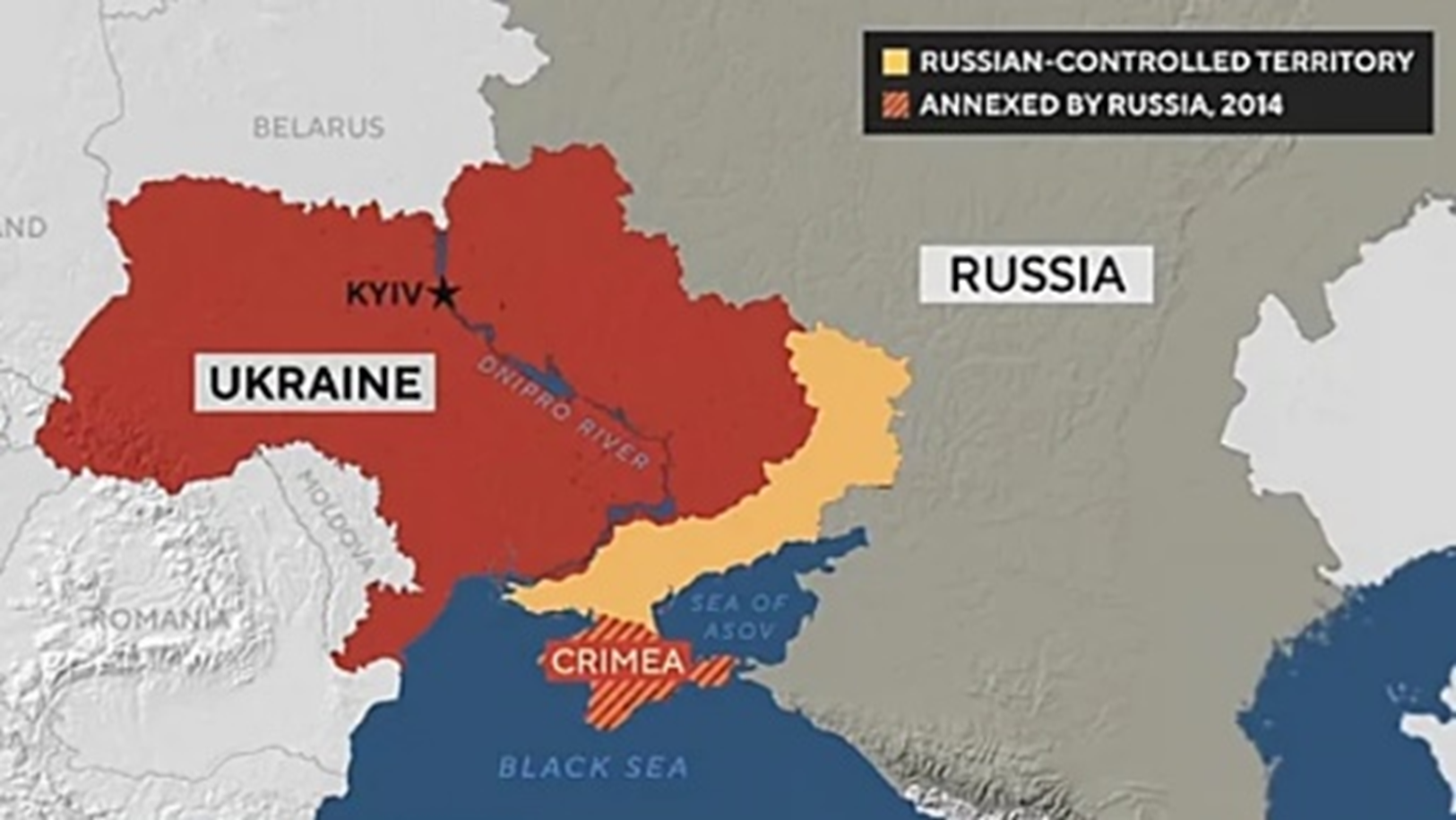 As we addressed in our previous ATW, the war in Ukraine continues with no end in sight. However, recently, Ukraine has been stepping up its drone attacks on targets deeper into Russia and Crimea. Ukrainian drones have struck as far as Yekaterinburg, over 1,000 miles from the border, shutting the airport there multiple times. The major oil refinery in the Kapotnya district—which supplies a large portion of the capital’s fuel, was also damaged. On the ground, Russia gained a net of only about 10 square miles in the four weeks through mid-June — down from 20 square miles the prior month. Ukraine’s intelligence says Crimea is now a “zone of constant losses,” with strikes on Russian air defenses and military airfields there intensifying, and Russia redeploying air defenses toward Moscow and the Kerch Bridge in response. In addition, there were reports that Putin could be pushing Belarus to get more involved in the war effort against Ukraine. There are land-based elements there that help guide Russian attack drones into Ukraine, and those could become targets for Ukraine. Lukashenko is in a difficult position, and we believe he does not want to be dragged into the fighting to open up another front, as he knows targets in Belarus will be at risk of attack. With respect to EU engagement, following the G7 Summit, where the Iran MOU signing took up much of Trump’s attention, he did turn his attention to Ukraine, but will likely continue to encourage the EU to take more of a lead role in driving a resolution to the conflict. However, it is unlikely that Putin comes to the table soon, especially as Ukraine continues to strike deeper into Russia, and Putin has not relented on his demands of a Ukrainian withdrawal from the Donbas region and some recognition of Crimea.
“Russia’s invasion of Ukraine was driven in part by its perception of Ukraine’s integration with the West as a strategic threat; however, the war has largely produced the opposite outcome. NATO has expanded, European defense spending has increased significantly, and European governments have begun reassessing their broader security posture. The conflict has also ended the post–Cold War assumption that large-scale interstate war in Europe was unlikely, prompting the most substantial rearmament effort in decades. This shift appears structural rather than temporary, with elevated defense spending likely to persist into the next decade. For financial leaders, the broader implication is that future conflicts may be determined as much by industrial capacity, manufacturing strength, and supply chain resilience as by military capabilities. Concurrently, the Trump administration has increasingly emphasized that European security should be led and financed primarily by Europe. The U.S. has continued to promote burden-sharing and encouraged European governments to assume greater responsibility for funding Ukraine’s long-term defense. Given that Europe will bear much of the long-term cost, the U.S. is indicating that European governments should define the parameters of an acceptable settlement. While a major battlefield shift, political change in Russia, or significant economic disruption could accelerate negotiations, none appear imminent. As a result, Washington is likely to continue supporting diplomatic efforts behind the scenes while avoiding direct ownership of a potentially unsuccessful peace proposal.” – General Robert Walsh
“Ukraine’s long-range strike campaign is becoming strategically important. Kyiv is attacking the systems that allow Russia to continue the war—fuel, logistics, defense industry, command nodes, and Crimea’s support infrastructure. These strikes are not yet breaking Russia, but they are imposing strategic friction and increasing the cost of the war. Putin is unlikely to negotiate seriously while he believes time favors Russia. That is why Ukraine’s deep-strike campaign matters: it challenges Putin’s theory of victory. If Ukraine can keep hitting critical Russian infrastructure while holding the line, it changes Moscow’s calculus. Belarus is worth watching, but I would not overstate it. Russia may pressure Minsk to provide more support or open a new axis, but Lukashenko has strong reasons to avoid direct entry: domestic instability, weak military capacity, and fear of Ukrainian retaliation. The United States should not make Ukraine ‘simply Europe’s problem.’ Europe must do more, but the U.S. remains essential for intelligence, air and missile defense, long-range strike support, and strategic pressure. Into the summer, expect a violent but inconclusive ground war, with Ukraine expanding deep strikes and Russia responding with mass drone and missile attacks. The best path to negotiations is to help Ukraine raise the cost to Russia—not pressure Kyiv into premature concessions.” – General David Deptula
“While Iran and the crisis in the Strait of Hormuz is consuming the world’s bandwidth, Ukraine has been steadily chipping away at Russian strategic supply lines and Russian confidence. President Putin had hopes that the spring and summer would provide windows of opportunity to solidify military gains in the Donbas and increase psychological and economic pressure on Ukraine through long-range strikes on power infrastructure and soft targets. Some of those effects have been realized. Alternately, President Zelensky has slowly worked his way around Europe leadership seeking continued economic and military support while launching strategic operations to remind Russia that even Moscow lies within the reach of Ukraine’s asymmetric and increasingly conventional capability. While Russia has labored through long-range strikes to attrit Ukrainian manufacturing capability, some estimates indicate that Ukraine will still produce over 4,000,000 drones this year – many of which will be expendable, one-use versions. Despite increasing unpopularity with the Russian people, President Putin shows no signs of accepting the framework for a sustained ceasefire, and fighting is likely to continue unabated through the summer. All eyes will be on Ankara in the coming weeks as Turkey hosts the NATO Summit from 7-8 July. While the Iran conflict is likely to figure largely into discussions there, expect NATO allies to press President Trump for stronger resolve against Russia as a summit outcome. President Putin is likely to moderate his approach on the war based on what the U.S. signals during this important meeting.” – General John Evans
“Ukraine is demonstrating to the world the character of war is changing. Autonomous robotic warfare enabled by AI provides lesser-resourced actors long range precision strike capabilities heretofore the domain of superpowers. Ukrainian drone strikes deep into Russia, and into Moscow in particular, may not lead to Ukrainian victory, but will certainly delay if not prevent Ukrainian defeat. Ukrainian leverage in negotiations that may be forthcoming increases with each deep strike. Russian public sentiment is deteriorating and its troops are exhausted and failing. The recent defiance of one Russian commander claiming to speak for many is telling. The mood shift in Russia is not in Putin’s favor and he may soon need a settlement as much if not more than Zelensky.” – General David Beydler
“There is growing external pressure on Russia to consider some form of ceasefire, but the war is still far from over. As Ukraine expands its drone campaign and long-range strikes deep into Russian territory, including against energy and military targets, the conflict is increasingly felt inside Russia and raises questions about how long the public will tolerate a drawn-out war. The continued loss of Russian soldiers and rising pressure on Crimea make Putin’s eventual openness to a ceasefire more plausible, but any deal would have to be framed in Russia as at least acceptable, and certainly not as a defeat. For Ukraine, sustained support from the United States, though the future level of that support remains uncertain, and strong backing from key European states both strengthen Kyiv’s bargaining position, even as Ukrainian leaders seek an outcome that can be presented at home as favorable. Many in Europe also likely see strategic value in Russia being tied down in Ukraine, which reduces Moscow’s capacity to threaten wider Europe in the near term, even as they worry that a badly designed ceasefire could let Russia regroup. As a result, it is likely that the summer will bring more of the same pattern: grinding combat and incremental Ukrainian successes, gradually increasing Kyiv’s leverage in any talks. At the same time, approaching U.S. elections and the possibility of a different Congressional balance could reshape American support for Ukraine, potentially increasing pressure on Putin if aid expands, or easing it if support wanes.” – General Steven Basham
“We will need to consider the dynamics and outcomes of the Ankara Summit carefully. European NATO nations, confident that they are addressing the funding challenges that have been thrown at them, are getting accustomed to taking the leading role in providing support to Ukraine. They have seen no progress in the Trump administration’s bold assertions that they would be able to bring peace. So, expectations of any form of decisive U.S. leadership are low, particularly as they will continue to be preoccupied by the outcome in the Gulf. The war will continue over the summer, Ukraine will do all it can to show Russia that it can fight through next winter, increase its own resilience, and hit deeper and more significant military and infrastructure targets. Nobody is likely to blink soon.” – General Sir Nick Parker
China | U.S. Economic Tensions
 Last month, following the Summit between Trump and Xi, we reported that while there were very few definitive deals that came out of the meetings (and China did not provide many details about what it actually committed to buying), economic tensions were brought down by the two sides looking to constructively engage with one another. However, last week, the Chinese Ministry of Commerce placed 10 American industrial suppliers on its export control list, including rare earth miners and drone makers — barring exports of any dual-use items originating in China to the companies. This directive was in response to the Pentagon earlier this month updating its so-called 1260H list by adding a slew of Chinese technology companies to a list of entities it believes to have aided Beijing’s military. While these actions by China are largely symbolic as the companies targeted have little to no business exposure to China (and the 1260H designation by the U.S. did not impose sanctions on the Chinese companies in question), the message was clear that China will respond in kind, but not immediately escalate the situation, hopefully in a manner that will allow for trade relations to continue in other unaffected areas. However, China continues to exercise its authority around Taiwan. For the past several weeks, Chinese coast guard ships have been intercepting commercial vessels near Taiwan by asking them to report their intended routes. China claimed this was a direct response to Japan and the Philippines announcing formal discussions on their maritime boundaries. However, China’s actions were met by a rare strong condemnation by the UK, France, and Germany. In addition, China’s most advanced aircraft carrier, the Fujian, sailed through the Taiwan Strait last week. The transit occurred just as Taiwan began its five-day annual military drills. This tension around Taiwan follows a standoff between four Chinese warships and a Philippine Navy vessel near the disputed Scarborough Shoal last week. While each of these incidents do not amount to a significant concern, taken all together, it is clear that there will be continued tensions in the region between the U.S. and its allies and China on a variety of levels, any one of which could result in an unintended consequence.
“The Trump–Xi meetings were less about trade negotiations and more about managing the world’s most consequential geopolitical relationship. Today’s rivalry is increasingly driven by national security concerns on both sides. China’s strategic ambitions are expanding faster than its economic priorities, with its leadership viewing competition with the U.S. as a long-term strategic contest. As a result, the U.S.–China relationship is shifting from one defined by economic integration to one shaped by strategic competition. Both countries are now focused on establishing new frameworks to manage this rivalry. The central challenge is sustaining economic growth while reducing strategic vulnerabilities. For the U.S., this means limiting dependence on China in critical sectors; for Beijing, it involves reducing reliance on Western technology and financial systems. Much of this competition centers on control of the technologies that will underpin future economic and military power—particularly advanced computing, which may prove as pivotal in the 21st century as oil was in the 20th. For investors, the defining factor of this new era will be how effectively the U.S. and China navigate an increasingly complex rivalry while remaining deeply economically interconnected.” – General Robert Walsh
“I would not view the recent summit as a reset. It lowered the temperature, but the underlying competition remains. China continues military modernization, coercion in the South China Sea, pressure on Taiwan, and efforts to dominate critical supply chains. The United States continues restricting Chinese access to military-relevant technology. China’s retaliation against U.S. entities, including rare-earth-related firms, shows Beijing is willing to use supply chains as leverage. The United States should assume rare earths, batteries, semiconductors, shipbuilding, drones, AI infrastructure, and undersea systems are all part of the same strategic competition. Militarily, China’s carrier operations and pressure around Scarborough Shoal are intended to normalize coercion and test U.S. alliance credibility with the Philippines. The response should be steady: harden supply chains, accelerate domestic critical-mineral and defense-industrial capacity, strengthen Indo-Pacific alliances, and avoid trading military advantage for short-term commercial calm.” – General David Deptula
“China is capitalizing on the U.S. focus on other issues. Xi has been busy on military, diplomatic, and economic fronts to bolster his objectives. Recent activity at Scarborough Shoal suggests that China continues to use creative methods to routinize its presence and control over territory it claims. It also further demonstrated its military capability in the region, pushing its operations to include longer deployments with more sustained, complex operations. The recent 40-day carrier deployment in the South China Sea and Western Pacific included day and night flight operations with aerial refueling. The transit of China’s newest aircraft carrier through the Taiwan Strait during Taiwan’s defensive military exercise was certainly intended to send a strong signal about China’s military strength. Separately, Xi continues to strengthen his ties with Russia and North Korea. The two-day visit to North Korea earlier this month shows that Xi is committed to maintaining China’s influence over North Korea. China’s targeted imposition of trade restrictions should not derail agreements made during Trump’s visit in May and could strengthen Xi’s hand in further trade discussions this fall during his U.S. visit.” – Admiral Kelly Aeschbach
“It’s very telling that China is providing humanitarian assistance to our closest neighbor in Cuba. I see China continuing to balance the trade tension with their efforts in showing the world how stable they are through providing humanitarian assistance and other global leadership opportunities. China wants other world leaders to see that they are a better alternative to the U.S. They are showing that they are stable, reliable, and non-judgmental. They can do this tactically while posturing strategically by not overdoing anything that would catch the ire of the administration. China is still the one to watch and our nation’s biggest strategic competitor.” – General Brian Cavanaugh
“China emerges from both conflicts with expanded opportunities but also greater strategic complexity. Beijing benefits when the United States must divide attention among Europe, the Middle East, and the Indo-Pacific, yet China’s own prosperity depends upon stable trade routes and regional stability. Consequently, Beijing is not going to become a security guarantor in the Middle East, preferring instead to expand its influence through trade, infrastructure, diplomacy, and technology. Despite domestic economic challenges—including slower growth, debt, weak consumer demand, and youth unemployment—China remains a major source of investment and infrastructure financing. The aftermath of the Iran conflict presents opportunities in Gulf energy infrastructure, logistics corridors, ports, data centers, AI infrastructure, reconstruction, and yuan-denominated trade, allowing Beijing to expand influence through economic dependence rather than military commitments. Both wars offer important lessons for Chinese strategists. Ukraine demonstrated the costs of large-scale conventional war, sanctions, and prolonged attrition, while Iran highlighted how geography, maritime chokepoints, drones, missiles, proxies, and gray-zone tactics can impose significant costs on stronger powers. Beijing is almost certainly studying U.S. munitions consumption, coalition cohesion, sanctions enforcement, battlefield transparency, and the limits of stand-off military power. The most likely implication for the Indo-Pacific is not an imminent invasion of Taiwan, but an expansion of gray-zone coercion—including maritime pressure, cyber operations, information campaigns, economic coercion, and military demonstrations—that test U.S. resolve while avoiding direct conflict.” – General Robert Ashley