
Around the World with Academy Securities
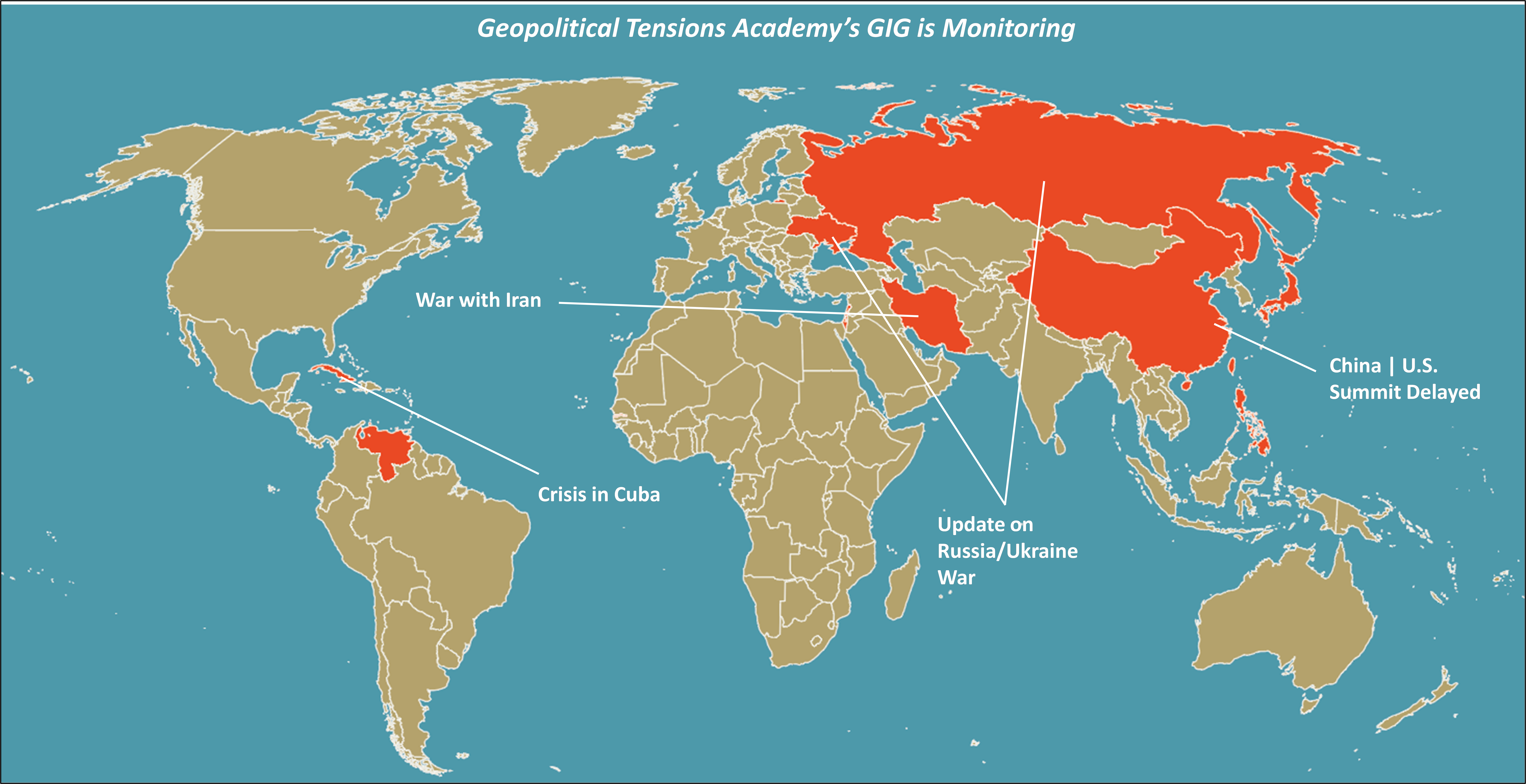
In this month’s edition of Around the World with Academy Securities, our Geopolitical Intelligence Group (GIG) focuses on the following geopolitical tensions that we are monitoring:
- War with Iran
- Crisis in Cuba
- Update on Russia/Ukraine War
- China | U.S. Summit Delayed
We begin this report with an update on the war in Iran. As the conflict enters its fourth week, the U.S. and Israel have achieved many of their military objectives, but the concern is that Iran still maintains the ability to threaten the Strait of Hormuz. Options are being prepared to continue to degrade Iranian capabilities and there are now two Amphibious Ready Groups/MEUs heading to the region. These assets could be used as leverage if the decision is made to conduct coastal raids in the Strait and on surrounding islands, and once clear, the U.S. could move an ARG closer to Kharg Island in an effort to further pressure the regime. The 48-hour ultimatum regarding the Strait was postponed for 5 days pending the outcome of “very good” talks with Iran over the weekend. Next, we revisit the crisis in Cuba as the economy continues to deteriorate. With an oil blockade in place, rampant inflation, and a regime under significant pressure, change of some kind with respect to the regime is likely. We also provide an update on the war in Ukraine, where Zelensky is struggling to regain the focus (as well as financial and military support) of the U.S. and the EU and restart peace talks. Russia is planning an offensive to kick off the spring fighting season and its objectives have not changed. Finally, we address the delayed summit between President Trump and Xi in China. With the war in Iran, the decision to push the summit out a month or so is not surprising, and there will be much to discuss including Iran, Venezuela, Cuba, the Arctic, Taiwan, and of course the trade deal between the two nations.
Please reach out to your Academy coverage officer with any questions and we would be happy to engage.
Front and Center: War with Iran
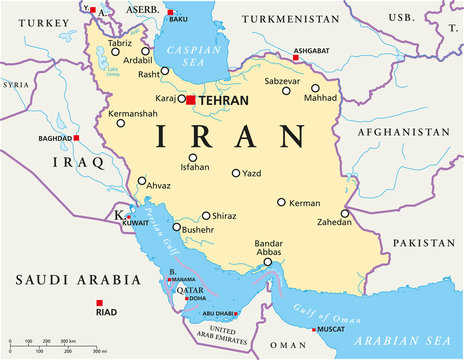 As we reported in our SITREPs, the U.S. and Israel commenced military operations against Iran on February 28. As the conflict enters its fourth week, it is clear that Iran’s ballistic missile and drone manufacturing, storage, and launching capabilities have been significantly degraded, as demonstrated by their rate of retaliatory strikes, which has been reduced by 90%. In addition, Iran’s Navy and Air Force have been decimated and many regime and IRGC senior leaders have been killed. The strikes on the nuclear assets will further inhibit Iran’s ability to reconstitute that program as well, though the ~900lbs of highly enriched uranium buried deep underground in the rubble at the nuclear sites will eventually have to be secured. However, Iran retains the capacity to retaliate as seen in the Ras Laffan attack last week following the South Pars strike by Israel. In addition, the Strait remains under threat by Iran as the U.S. continues to race against the clock to suppress Iran’s ability to fire anti-ship missiles and drones as well as deploy mines in the area. The U.S. has been in discussions with allied nations to help support transit escort operations, but at this time, the focus is on continuing to degrade Iranian offensive capability in the Strait. The USS Tripoli ARG/31st MEU is on the way, and should be on station in the North Arabian Sea by the end of the week. These assets could be used in an operation to help clear the coastline or small islands in the Strait, or even for the seizure of the Kharg Island oil terminal, where the U.S. hit Iranian military targets on March 13. The USS Lincoln CSG is still operating in the North Arabian Sea, and the USS Ford is in Crete for repairs. The USS H.W. Bush is on its way to the Mediterranean and the USS Boxer ARG /11th MEU also recently deployed from San Diego. These assets will give CENTOM additional options. The goal will be to provide enough pressure on Iran to release its hold on the Strait, but additional progress will have to be made in order to secure the Strait to first allow passage of U.S. warships, and then tanker traffic (potentially escorted by the U.S. Navy). Finally, the 48-hour ultimatum announced on Saturday night by President Trump was pushed back to the end of the week, but it remains to be seen if those talks will result in anything constructive to end the conflict.
“The conflict is entering its fourth week and appears to be shifting from an initial phase of rapid, high‑intensity strikes into a more complex and protracted campaign of pressure and attrition by the United States and Israel. This transition has been driven in part by Iran’s move toward asymmetric warfare, including attacks on Gulf infrastructure and efforts to disrupt the Strait of Hormuz. At present, there are no clear pathways to de‑escalation and no decisive ‘checkmate’ scenario under the current trajectory. Warfare is a clash of political will, and it is playing out. Despite clear U.S. and Israeli military superiority, it has not translated into strategic capitulation by Iran, reinforcing that this is not purely a military problem. Iran’s primary objective is regime survival rather than battlefield dominance, coupled with a strategy of imposing costs on global markets to compel the U.S. to halt its campaign and to deter future administrations from pursuing similar actions. U.S. objectives center on degrading Iran’s military capabilities and overall warfighting capacity, while Israel has focused more directly on targeting regime leadership, command structures, and mechanisms of domestic repression. There is a growing risk that target sets could expand beyond military assets to include economic infrastructure, particularly energy facilities. The most likely trajectory points toward either a prolonged conflict characterized by Iran’s full embrace of asymmetric warfare—including sustained disruption of the Strait of Hormuz and attacks on regional infrastructure—or a managed ceasefire in which both sides reduce hostilities while claiming domestic victory.” – General Robert Walsh
“It remains clear that there is no defined end state for the war and, therefore, it is difficult to determine when the strikes will be complete. While continuing to attack Iranian instruments of power may be strategically beneficial, it is unclear what our strategic end state might be. If we cannot come to an agreement with Iran, it is likely we will need to open the Strait, and this may well require employment of ground forces in the littorals. It seems clear that we don’t know the specific Iranian capability and capacity located on land in the Strait, and this is the only way to verify whether a threat remains. I think it is unlikely Iran will capitulate and if that holds true, we will be required to secure and open the Strait so that our partners in the region can resume economic activity. Once the Strait is open, we will find an adequate offramp, likely with a long-term requirement for sustained overwatch so Iran cannot rebuild nuclear and ballistic missile production capability. Finally, there will remain the question of how to eliminate the nuclear material. This will need to be negotiated as part of a settlement. If this cannot be negotiated, it could require a precise and high-risk military operation by the U.S. or the Israelis.” – General Lewis Craparotta
“In addition to the MEU, think tank JINSA is reporting the 82nd Airborne crisis response force is on alert to deploy to the region. The threat of an island seizure may have limited to no deterrent effect on Iran at this point. While the number of launches from Iran has significantly reduced, I would not assume we’ve reduced their inventory to a point they could not hold any U.S. forces seizing any regional island at some degree of significant risk. A Kharg Island seizure risks tying up forces in a force protection role that may be better applied to the Strait opening efforts.” – General Robert Ashley
“Israel may indeed see Hezbollah’s decision to launch retaliatory attacks in response to Iranian operations as an opportunity to conduct ground operations in Lebanon, but it will take the cooperation of the Lebanese military and the Lebanese government to truly bring Hezbollah to heel. Hezbollah’s tentacles reach throughout the country, not just in the south. Lebanese President Aoun’s recent criticism of Hezbollah – accusing the group of endangering the country and calling for its disarmament – was a break from the past. Escalating Israeli military actions, however, will leave him less operating room to achieve these goals politically. Iran will not capitulate to President Trump’s ultimatum (though it was pushed back on Monday). From Tehran’s perspective, its actions in the Strait are designed to inflict real pain on the U.S. and this threat is proof that its strategy is working. We can’t forget that the Iranian leaders that remain are thinking through a prism that is colored by a desire for vengeance. Ironically, they may also view the destruction of domestic power facilities as an acceptable loss. Yes, it will create significant hardship on the Iranian people, but the regime will be able to blame the U.S.” – Linda Weissgold, Former CIA Deputy Director for Analysis
“The U.S. and Israel will continue the war until Iran’s leadership is willing to make significant concessions or capitulate. Strikes will focus on mitigating threats to the Strait of Hormuz, eliminating key leadership figures, destroying long-range missile and one-way drone inventories, and impeding nuclear weapons development. If Iran continues to dig in and conduct retaliatory strikes in the region, it is increasingly likely that the U.S. will try to seize Kharg Island. Seizure of Kharg Island would provide significant leverage against the Iranian regime. Iran’s firing of intermediate range ballistic missiles at Diego Garcia reveals that they can strike Europe. This development could sway European countries to commit to supporting escort operations, and they could potentially provide other capabilities to facilitate ongoing U.S. operations.
I agree with Linda that Iran will not yield to any ultimatum. Iran will respond to any attack on its power plants with more missile or drone strikes. Iran could employ more of its long-range missile capabilities in strikes against U.S. military facilities in Europe (for example, Souda Bay is within the range of the IRBM Iran launched at Diego Garcia) or at more critical infrastructure in a broad range of countries. Iran is counting on the U.S. succumbing to international pressure to end this war due to unacceptable economic costs or domestic pressure due to unacceptable military losses.” – Admiral Kelly Aeschbach
“President Trump’s threat to destroy Iran’s power supplies ignores Iran’s biggest opportunity: A global fuel price crisis and global economic risk while sowing disharmony against the U.S. and Israel, all for the simple sacrifice of its power supplies and the increased strategic costs to rebuild, which will likely fall to the U.S. and its Gulf neighbors. This is straight from the Russian playbook – of historical suffering for a cause.” – Admiral Sir George Zambellas
“An assault to seize islands in or near the Strait is militarily feasible, but not without significant risk. Introducing ground forces so close to the Iranian mainland increases the likelihood of casualties (this is both an operational and political risk), and would require sustained ISR, strike, and defensive capabilities to counter the same missile and drone threats currently directed at Gulf states and Israel. This is militarily achievable, but it’s not trivial and would require dedicated resources so long as the troops are there. But fundamentally, securing freedom of navigation in the Gulf is about more than just controlling the Strait itself. Even if we seize the Strait, Iran would still have the ability to strike regional ports, energy infrastructure, and population centers. Reopening transit is as much about reducing overall threat levels as it is controlling a specific chokepoint.
Larijani’s death will have substantial impact tactically. He played a key role in the Iranian security system (principally as a senior interlocutor who helped translate between political leadership and operational execution) and his loss will disrupt decision-making and strategic coordination. At the strategic level, however, the effects are more ambiguous. Figures like Larijani can also serve as internal moderating influences and backchannel interlocutors, and his absence may reduce the regime’s flexibility. Here’s what his death doesn’t do: it doesn’t alter Iran’s underlying strategy, it doesn’t materially degrade remaining missile and drone capacity, and it doesn’t create conditions for imminent regime collapse.
Iran will not capitulate — they have no reason to. This is an existential fight for the regime. They are prepared to withstand the kind of attacks Trump threatens and then some. The threat of strikes against the electrical grid does not alter their aims, their calculus, or their strategy. They expect the worst and are prepared for it.” – General Karen Gibson
“Trump’s and Israel’s unified objective is a new Iran (may or may not be achievable). The goal was to remove the leadership and weaken the IRGC and other historical tools of population repression (simultaneous to maintaining the ‘Anti-Iran’ sentiments across most of the Middle East). Over recent decades, most Middle East Islamic nations have feared Iran more than any other threat. Trump’s challenge has been to achieve destruction of Iran’s radical reach without storing up/unifying Muslim dissent. This was a difficult objective, until Iran helped by hitting their 10-day, pre-planned targets in the event of attack. When those pre-planned targets occurred with a command and control means to adjust/cease, Iran played a bit into Trump’s hands by (at least temporarily) reducing the threat of the Middle East Muslim population rising up against its own leaders (always a fine line for Saudi, Emirati, and Qatari national leaders to walk). Closing the Strait has not only challenged the world’s potential energy markets, but has also not helped Iran’s global status. The key now is can the administration degrade the IRGC sufficiently enough to generate an environment in Iran conducive to popular overthrow. The ARG/MEUs add an additional robust capability/threat for Iran to consider.” – General Mastin Robeson
Crisis in Cuba
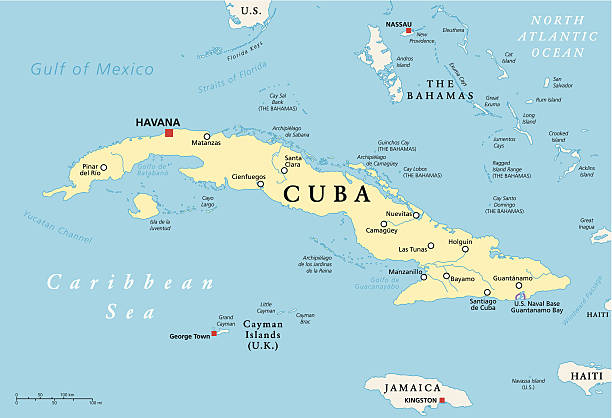
As we addressed in our previous ATW, the economic pressure campaign against Cuba is putting a severe strain on the country. The oil blockade on Cuba has accelerated the energy crunch, and nearly every aspect of Cuban society has been feeling the pain. Trash is piling up in the streets, hospitals are not able to conduct surgeries, and the delivery of goods and other services are being impacted as well. Migration continues to be a concern; as the humanitarian situation worsens, the U.S. has prepared for a mass exodus if there were to be a complete collapse of the government. Last week, the first nationwide blackout hit the country since the oil blockade was put in place earlier this year. Inflation is rampant (over 30%) and the economy in Cuba is under intense pressure. The question now is what is the ultimate plan for the regime? At this point, all options are on the table for the Miguel Díaz-Canel government, ranging from negotiations, where some easing of sanctions and providing investment and business opportunities could be instituted in exchange for some changes in regime leadership, to a peaceful or forced transition of power. The U.S. is likely not aiming for a collapse into chaos, which could potentially require U.S. forces on the ground to restore order, but the intent is clear – the regime must change, or be changed by force, because it is time to remove the heavy hand of Russian and Chinese influence 90 miles off the coast of Florida. The geopolitical landscape in the Caribbean is changing quickly, with the first domino to fall being Maduro in Venezuela earlier this year, and the stage is set for other transitions and changes to occur which will further secure the hemisphere.
“Cuba is facing an acute and escalating crisis, with limited options for economic relief. A combination of stringent U.S. economic sanctions and a targeted fuel blockade has contributed to the collapse of the island’s power grid. U.S. objectives appear less focused on precipitating an immediate systemic collapse than on managing Cuba’s instability to exert pressure on the leadership, broadly analogous to the approach previously employed toward Venezuela. The U.S. strategy requires a careful balance of applying sufficient pressure to encourage political and economic reform while maintaining enough stability to prevent a large‑scale humanitarian crisis, uncontrolled migration to the U.S., or allowing Russian and Chinese influence. Regime change does not appear to be the near‑term objective. Rather, the United States is seeking to shape a controlled transition toward a more stable, less adversarial, and economically viable Cuban state over which it can exert greater influence than Moscow or Beijing. Secretary of State Rubio stated that the current Cuban leadership is unacceptable, while the regime has made clear its intent to remain in power, underscoring the fundamental impasse between the two sides.” – General Robert Walsh
“I believe there is strong sentiment by the administration to use more decisive tools against the Cuban regime. We’ve seen the stick approach in Venezuela and now Iran, but there may be a carrot to offer Havana as their economy continues to flounder and aid from their old ally, Russia, is hard-pressed to provide relief. A quiet offer for Diaz-Canel to depart Cuba would not surprise me, but the Castro power vacuum would not be easy to fill. Russia and China are increasingly invested in seeing Cuba survive the economic onslaught, but the limits of their geographic reach into the Western Hemisphere are increasingly apparent – a strategic nuance that is not lost on the U.S. Cuban mass-migration to the U.S. is now a significant possibility. With DHS still unfunded in 2026, conditions are set for a Cuban humanitarian crisis, and enormous pressure on social systems in the U.S. gulf coast states should the Cuban exodus occur. The next few weeks will be critical as this unfolds.” – General John Evans
“With Cuba’s grid failing and economic conditions worsening, the central question is whether U.S. policy is oriented toward regime change or managed stabilization. Forcing Díaz-Canel out without a clear successor risks uncontrolled collapse, migration, and humanitarian strain, outcomes Washington likely seeks to avoid. A more plausible path may involve calibrated pressure paired with selective sanctions relief in exchange for incremental concessions, though Russia and China’s role in sustaining the regime complicates options and limits U.S. freedom of action. The humanitarian situation may ultimately force action on a faster timeline than policy options can realistically support.” – Shelby Pierson, Former Director of Analysis, National Geospatial-Intelligence Agency
“The Castroite regime has no easy solution, as it has no significant benefactor able to keep it afloat economically – no Soviet Union, no Russia, no Venezuela, and China will not come to the rescue. Thus, we see the regime making the laughable plea to the Cuban diaspora to please return from exile and save the very regime that sent them into exile. SecState Rubio has said that Diaz-Canel needs to leave. If that were to happen, and a regime leader willing to upend the ‘revolution’ emerges, the U.S. would probably ask for compensation for property seized by Fidel (a decades-old demand by ‘U.S. persons’), release of all political prisoners, Russian and Chinese facilities closed, free information flows (especially the Internet), and no mass migration. With those concessions, the U.S. would flow humanitarian aid (seeking to avoid delivering the aid via the regime), and would start negotiations on allowing ownership of private property which would allow private investment with enforceable contracts, thus establishing a free internal market. Meanwhile, SOUTHCOM is readying Gitmo for a mass migration event, just in case.” – General Rick Waddell
“The goal appears to be to create an economic situation that forces Miguel Diaz-Canel to leave office with much of his regime, largely supported by the Cuban people, with new leadership installed by, or with the approval of, President Trump. This will require a tremendous influx of immediate humanitarian relief, followed by the easing of sanctions with sustained support and, finally, robust and sustained economic investment.” – General David Beydler
“With the loss of Venezuelan oil, Cuba is an easy symbolic win for President Trump. Marco Rubio’s background positions him to broker the deal, likely with Castro’s grandson, for Diaz-Canel to become a compliant leader or face replacement. Diaz-Canel’s departure signifies change and facilitates the administration’s ability to circumvent Congress’s trade and investment restrictions on Cuba. Regardless of the outcome, this will be a foreign policy triumph leading into the midterms as Cuba transitions into a client state for the United States, opening its doors to U.S. businesses.” – General KK Chinn
“I think that the administration considers that Cuba is now at an inflection point. Between the loss of Venezuela’s energy support, ineffectual backing from traditional allies, and endemic economic and infrastructure weakness, Cuba is at an all-time low as a nation. Emblematic of this is the near-total electrical grid collapse which began on March 16. While the proximal event appears to have been a boiler failure at Cuba’s largest power station, the underlying causes were fuel shortages forcing plants to run at suboptimal capacity and to burn corrosive high-sulfur Cuban oil, and the poor maintenance state of the aging Soviet-era power infrastructure. My understanding is that, while the grid has now been restored, it is currently generating only about a third of its normal capacity. There is no quick fix for any of Cuba’s problems, nor will external assistance come to the rescue. Reportedly, there are several tankers carrying Russian petroleum en route but, even if they arrive, they are only a token effort. It is also not clear to me that the Cuban people are as committed to the idea of the revolution as they once were. My sense is that the administration seeks a gentle regime change in Cuba. Perhaps something like Venezuela without the shooting, which begins with a more pliable and receptive version of the existing government, and leads ultimately to something much more aligned with the U.S. I do not think that the administration is interested in throwing a lifeline to the current government in exchange for small concessions. They want change.” – Neil Wiley, Former Principal Executive, Office of the Director of National Intelligence
Russia/Ukraine War Update
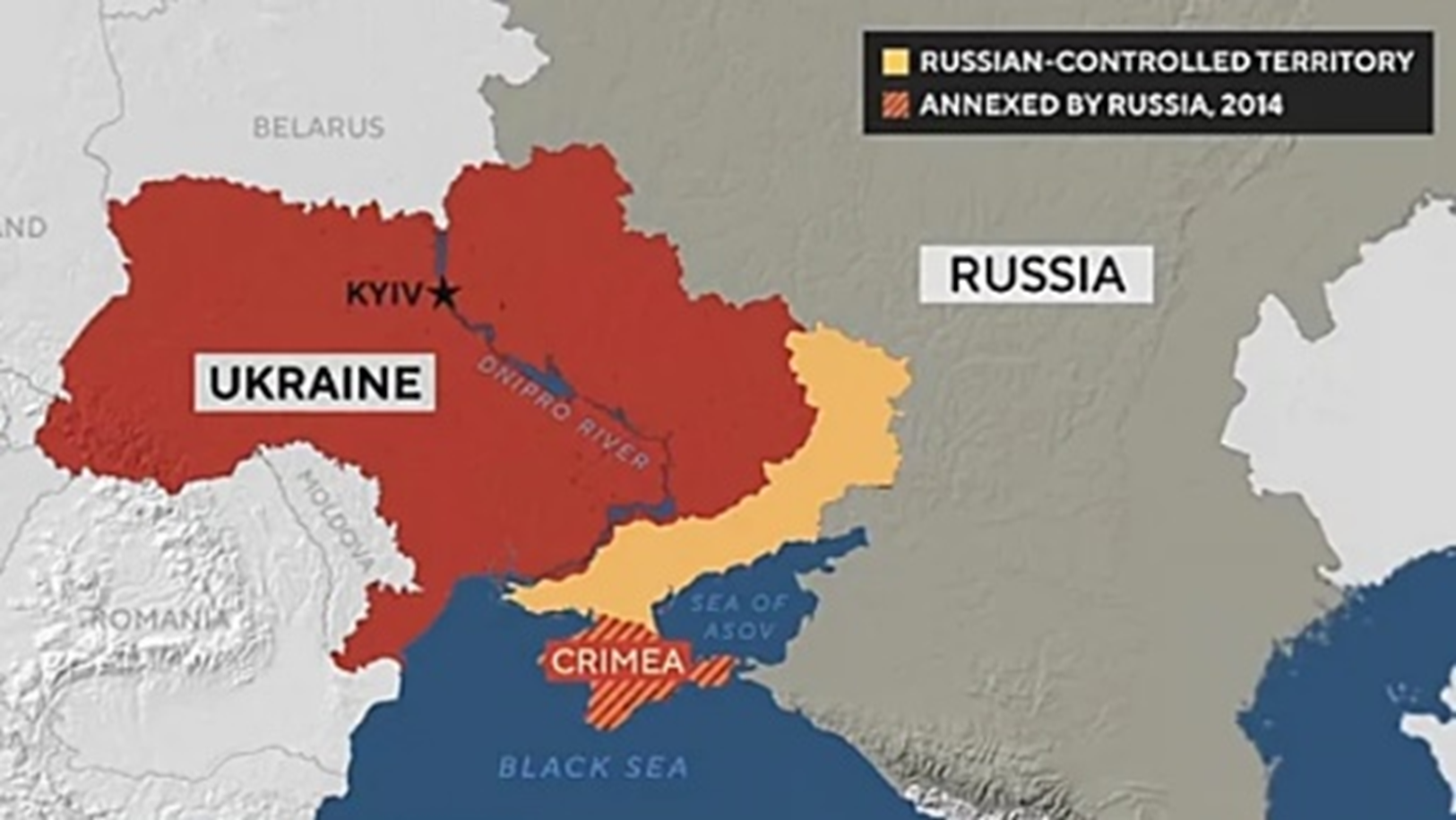 As we addressed in our previous ATW, the war in Ukraine continues with no end in sight. In fact, the war in Iran has likely pushed any kind of resolution further to the right, and the impacts are being felt by Ukraine. Kyiv is now dealing with a shortage of missiles and missile interceptors, some of which could have been deployed to Ukraine by the U.S. via European partners, but are instead being used in the war in the Middle East. These systems include Patriot systems as well as HIMARS and ATACMS. Zelensky fears that with all of the attention and resources being focused on Iran at this time, the likelihood of further peace discussions will be reduced in the near-term. Meanwhile, Russian President Vladimir Putin is expected to try to expand his military gains via new offensives that could put even more pressure on Kyiv. While Europe is still pledging support to allow Ukraine to stay in the fight, the arguments about key areas of financial assistance related to the $106b loan to Ukraine have rightly concerned Zelensky. In addition, Zelensky is likely watching the back and forth between the U.S. and NATO regarding support for opening the Strait, and he could perceive that any rift in NATO will lead to reduced support for Ukraine from the U.S. However, Ukraine is trying to do its part in the war with Iran by sharing its anti-drone capabilities with U.S. allies in the region. Russia is just biding its time, and will continue its push to claim the part of the eastern Donetsk region that remains under Ukraine’s control. The likely path forward will include a heavy spring fighting season as Putin continues to focus on his objective of winning additional territory in the east to gain leverage before even thinking about resuming peace talks.
“The war is entering its fifth fighting season and is shifting back toward intensified battlefield activity amid stalled diplomacy with U.S. attention diverted to the war with Iran. It puts the war in a very dangerous zone with little negotiations taking place as the fighting intensifies. Russia is expected to pursue renewed offensives in eastern Ukraine while Ukraine wants to make Russian advances as costly as possible. President Zelensky faces the challenge of sustaining Western support during this period of competing global crises. He is working to keep the war a priority for both the U.S. and European allies, emphasizing the need for continued aid and long-term security guarantees. The next several months are expected to have high intensity, but inconclusive fighting, with neither side achieving a decisive breakthrough. This phase is less about ending the war and more about shaping the conditions for potential negotiations later in 2026. The most realistic deal is not a final peace, but a rather a ceasefire and freeze along the current front lines and the creation of a DMZ under international monitoring.” – General Robert Walsh
“With international attention shifting toward Iran, Ukraine likely feels pressure to maintain alignment and visibility while continuing to manage a difficult battlefield environment. Momentum on peace discussions is likely to stall, placing greater emphasis on operational dynamics as the spring fighting season begins. Russia benefits from higher energy prices and reduced pressure on exports, extending its financial runway, while Ukraine is seeking to sustain support, including through offers of anti-drone technology cooperation. The U.S. approach is also divided by working on getting Russian oil into the market while navigating the challenges of the Iran/Russia relationship.” – Shelby Pierson, Former Director of Analysis, National Geospatial-Intelligence Agency
“The U.S. is now fully committed away from its peer challengers and Ukraine will be forced to rely far more heavily on the EU for support in the upcoming fighting season. U.S. stockpiles of weapons Ukraine has relied upon are being severely depleted in the Middle East and replenishment will take longer and cost more than announced. Ukraine will have to rely on the will of their people and the ingenuity of their forces to stave off defeat. Drone warfare will continue to affirm its ability to impose great costs on larger and better equipped attackers.” – General David Beydler
“The world’s eyes are off Ukraine and the events in the Gulf are generally beneficial to Russia. The increase in oil prices, along with the relaxation of sanctions, will give the Kremlin considerable encouragement. They have also seen more evidence of the rift that is developing between the U.S. and Europe, the divisions in Europe, and its lack of credible, deployable military capability. This will likely stiffen Russian resolve as it opens up new fronts to destabilize the West. The economic pressure triggered by the conflict in the Gulf will hit European nations hard and this in turn will make it more difficult for them to fill the vacuum which they must cover as U.S. support for the war becomes more partial. At the same time vital air defense resources are being consumed which could leave Ukraine exposed next winter. Russia’s bargaining position has therefore been strengthened, there is no incentive for it to change its negotiating position, and it is in a strong position to benefit as the economic crisis triggered by the conflict in the Gulf unfolds.” – General Sir Nick Parker
“The war will continue throughout 2026. Although currently ‘paused,’ diplomacy will proceed but with little prospect of result due to the fundamental incompatibility of the two parties’ goals. Russia shows no indication of compromising its demands for territorial concessions, future Ukrainian neutrality, and constitutional revision restoring the status of the Russian language and the Russian Orthodox Church. Indeed, recent Russian statements imply that a negotiated settlement will be impossible with what it is now regularly referred to as the ‘Kyiv regime,’ suggesting that regime change is now an unstated Russia goal. For its part, Ukraine is unwilling, and probably politically unable, to compromise on any of the core Russian demands, focusing instead on obtaining an unconditional ceasefire along the current lines of contact. Militarily, this remains an attritional war in which Russia has the material, economic, and demographic advantage, imposing little incentive for Russian compromise. Conversely, the Gulf conflict has weakened Kyiv’s leverage. The war has refocused public attention, and diplomatic bandwidth, away from Ukraine, and highlighted the fragility of European energy availability without Russia as a ready provider. The Gulf conflict also exacerbates the potential shortage in key munition types, particularly in air defense interceptors, which were already stretched by the Ukraine War, making the availability of additional weapons for Ukraine in any meaningful quantity unlikely. Finally, Ukraine survives on foreign funding. The 90b Euro loan to Ukraine has still not materialized, being held up by a dispute between Hungary and Ukraine over Russian energy flow through the Druzhba pipeline. While not directly caused by the Iran conflict, it further adds to the economic and political pressure on Kyiv.” – Neil Wiley, Former Principal Executive, Office of the Director of National Intelligence
“The war between Russia and Ukraine is likely to continue through 2026, with limited prospects for a significant breakthrough by either side. Russia currently benefits from sustained oil export revenues despite sanctions, continued demand from buyers such as China and India, the recent easing of certain U.S. restrictions on Russian oil exports in response to Iran’s blocking of the Strait of Hormuz, and a degree of international distraction due to crises elsewhere, while Ukraine faces constrained funding and ammunition supplies, particularly from the United States.” – General Steven Basham
China | U.S. Summit Delayed
 Last week, the White House announced that China had agreed to postpone Donald Trump’s visit to Beijing, as war in the Middle East rages on. Trump and Xi’s meeting, which is now likely to take place in May, was expected to focus on the next phase in the U.S.-China trade war, which has been under a temporary truce since October. The topic of Iran will likely be discussed, in addition to other geopolitical concerns including Venezuela, Cuba, the Arctic, and U.S. support for Taiwan. China is watching all of these events closely as one by one, their regional influence in the Western Hemisphere, the Middle East, and even the Arctic is being affected. However, like Russia, China is likely benefitting as the war with Iran drags on and distracts U.S. attention on the Indo-Pacific and Europe, especially as U.S. military assets are being directed to the Middle East. A delay in the state visit could also mean a delay in any arms sales to Taiwan. However, this comes at a time when the U.S. intelligence community has recently said that it does not believe China is planning to invade Taiwan in 2027. Director of National Intelligence Tulsi Gabbard told Congress during a worldwide threat hearing last week that “The IC assesses that China likely prefers to set the conditions for an eventual peaceful reunification with Taiwan, short of conflict.” However, this assessment can always change, and factors like China’s purge of military leadership, strategic preparation, and unforeseen circumstances like a shift towards an independence movement in Taiwan could change the calculus. In the near-term, when the meeting between Trump and Xi is held, the focus will largely be on trade and finding ways the two countries can work together, and the goal of the U.S. is to deter China though “strength, not confrontation” per the most recent National Security Strategy.
“The delayed U.S.–China summit was intended to focus primarily on trade, with Presidents Trump and Xi expected to extend a fragile tariff truce. China has shown little concern over the postponement, which may ultimately prove advantageous by allowing both sides additional time to prepare. Even prior to the announcement of the delay, reports indicated concern that the U.S. had not developed concrete deliverables, in part due to its preoccupation with the conflict with Iran. The postponement provides both governments with an opportunity to more thoroughly develop an agenda commensurate with the stakes facing the leaders of the world’s two largest powers. The conflict with Iran is unlikely to provide China with leverage in the negotiations, as China sources approximately 90% of its energy from the Middle East, compared with only 2–3% for the U.S. Meanwhile, U.S. intelligence agencies are closely monitoring Chinese activity near Taiwan to ensure Beijing does not attempt to exploit U.S. strategic focus elsewhere.” – General Robert Walsh
“The world was eager to see how President Trump would apply his national security strategy with Xi and China (strength, not confrontation) during the upcoming summit. As that engagement slips further right due to the conflict in Iran, both sides will have an opportunity to reconsider their approach. It’s possible that China’s reticence to engage more decisively on behalf of Iran was moderated by the prospect of a visit by Trump. Even Xi understands the strategic implications and validation that comes with a state visit from a U.S. president. With this opportunity lost, and increasing pressure from the world community to cease hostilities in the Persian Gulf, China may flex their economic muscle more visibly on behalf of Iran and Cuba.” – General John Evans
“China is content with the Trump Administration expending energy and resources in the Middle East and political capital at home as they continue to build a force with capability and capacity to challenge the U.S. in the Western Pacific and beyond. They are watching closely and preparing accordingly.” – General David Beydler
“The summit delay reflects the underlying reality that U.S.-China relations are defined by a long-term strategic rivalry, deeper than any single event or personality. The Gulf conflict accelerates this trend, with China benefiting in the short-term through continued access to Iranian energy while the U.S. is strategically distracted. However, its dependence on Gulf stability will enforce a cautious approach. Rising energy prices and broader economic strain will test U.S. alliances and create opportunities for China to expand its influence, particularly across emerging markets. Any cooperation between the two superpowers will be limited and transactional. The direction of travel remains towards a deeper strategic rivalry, increased economic fragmentation, and a more volatile operating environment.” – General Sir Nick Parker
“The outcome of the postponed talks will be shaped by this administration’s progress in achieving its goals in Venezuela, Cuba, and Iran. Success in moving all three countries from regimes that are anti-U.S. and pro-Russia/pro-China to regimes that are cooperative with and supportive of U.S. interests bolsters Trump’s position significantly. If the U.S. falters in achieving its goals particularly with Iran, China will likely be emboldened to press for significant concessions in the talks in areas such as U.S. support for Taiwan and the U.S. sharing of advanced technologies.” – Admiral Kelly Aeschbach
“With the summit likely delayed, near-term U.S.-China engagement becomes more transactional and fragmented. I will be watching to see if the agenda is less ambitious. China continues to purchase Iranian oil while avoiding direct involvement in maritime security, positioning itself to benefit economically while preserving optionality. The key question is what influence Beijing is willing to exert on Tehran and what, if anything, the U.S. might be willing to offer in return, particularly if Gulf dynamics begin to intersect with broader trade or technology issues. At the same time, renewed PLA activity around Taiwan suggests China may be testing the limits of perceived U.S. distraction, but in a deliberate and calculated way.” – Shelby Pierson, Former Director of Analysis, National Geospatial-Intelligence Agency
“Essentially, China has gone back to business as usual with their flights into the ADIZ and their other harassment and pressures on Taiwan. Their goal is reunification and their preference is peacefully. As the U.S. pulls capability out of the region with the MEU heading to the Middle East, events in the Western Pacific tilt towards a Chinese advantage. Our nation started to pivot to the Pacific over a decade ago, but we have tended to continually be drawn back to the Middle East. Sun Tzu’s ‘the enemy of my enemy is my friend’ comes to mind and I see no reason why Xi would not want some moderate Iranian success over the next few months. He is still getting his oil, U.S. threats to him in his region are being pulled away, and he can still appear to be non-threatening to the U.S. as he sits on the other side of the globe just watching. Xi could absolutely influence an outcome in Iran, but I don’t know that the U.S. would want anything that would look like Xi being a global peace negotiator. Historically, that has been a role of the U.S. for the past century and I’m confident this administration wouldn’t welcome that influence.” – General Brian Cavanaugh
“With the ongoing war with Iran, I don’t envision meaningful results for U.S./China discussions. Recent U.S. intelligence assessments have the purge of generals from the PLA moving any potential cross-strait invasion of Taiwan further beyond 2027. I agree with other assessments that the U.S. would not welcome a Chinese role as ‘benevolent facilitator’ of negotiations between Iran and the U.S.-Israeli contingents. It can be expected that the Chinese will perceive the U.S. as being distracted with the Middle East and will take advantage of the situation to use grey-zone activities, such as its naval militia forces, to continue to antagonize our regional allies. As a result of the conflict with Iran, a longer-term U.S. commitment to provide forces to stabilize the Middle East will dilute the ability of the U.S. to convincingly execute a ‘deterrence through strength’ effort against Chinese regional ambitions.” – General Tom Bouchard