
Around the World with Academy Securities

In this month’s edition of Around the World with Academy Securities, our Geopolitical Intelligence Group (GIG) focuses on the following geopolitical tensions that we are monitoring:
- Will Venezuela Strikes Result in Removing Maduro in 2026?
- Russia/Ukraine Peace in 2026?
- Will the Ceasefire in Gaza/Lebanon Hold in 2026?
- China/Taiwan Tensions Continue in 2026?
- Will Russia and China Expand Their Footprints in Africa in 2026?
We begin this month’s ATW with an update on the situation in Venezuela as the United States ramps up pressure on the Maduro regime. While the U.S. continues to threaten land strikes, it has also started interdicting oil tankers under a new strategy of enforcing a blockade on sanctioned vessels. The economic impact will be felt quickly and will reduce the oil revenue Maduro relies on to pay the military and drug cartels which help keep him in power, thereby accelerating what will likely be the end of the regime next year. Next, we address the war in Ukraine where Russia maintains the upper hand militarily and will continue to fight for territory in the eastern part of the country that it believes it needs to control before any meaningful talks to end the war can occur. We also address the ceasefires in the Middle East between Israel and both Hamas and Hezbollah, where the new normal will include Israeli strikes against key leadership and capabilities it deems a threat to the country. As Iran reconstitutes both its long-range weapons and nuclear programs in the new year, expect further strikes on infrastructure critical to these endeavors. In addition, we address the continued tensions in the region between China and Taiwan, and the likelihood that the U.S. will maintain the strategy of strategic ambiguity with respect to Taiwan. Finally, we revisit Africa and the economic and security opportunities for the U.S. on the continent in 2026.
Please reach out to your Academy coverage officer with any questions and we would be happy to engage.
Front and Center: Will Venezuela Strikes Result in Removing Maduro in 2026?
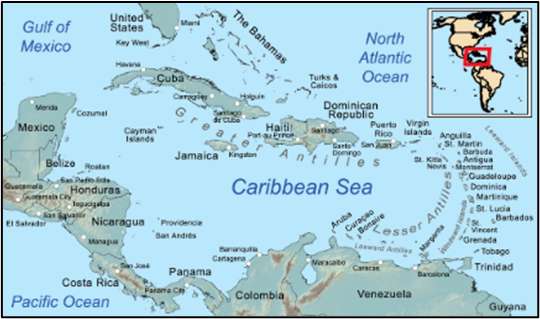
As we have addressed in our recent SITREPs, the pressure is mounting on the Maduro regime to step down. While the U.S. campaign began with military airstrikes on suspected narco-trafficking vessels in the Caribbean and in the Pacific, it has now expanded to economic pressure by seizing sanctioned oil vessels coming in and out of Venezuela. However, the question remains: when will the highly anticipated strikes on land against narco/military targets begin? Now that we have a better idea of the true objectives of the operations against Venezuela, the likelihood is that strikes on land will be required to accelerate the removal of the Maduro regime, with possible targets including narco-infrastructure (i.e. production and distribution centers) as well as Venezuelan air defense systems to allow for complete freedom for the U.S. to operate in the skies over Venezuela should the U.S. move forward with air strikes. China and Russia will be losing a major partner in the region, but the reality is that they will not get involved, outside of calls to the UN condemning U.S. actions in the region. 2026 will be a very active year in Central and South America with the U.S. now counting Bolivia as a partner following the change in leadership there and elections upcoming in Colombia and Brazil. Expect the U.S. to follow through on its new National Security Strategy priorities that include a focus on the Western Hemisphere and ensuring that China and Russia do not have a foothold in the region.
“President Trump’s foreign policy reputation is at stake regarding whether Maduro is ousted from office in 2026. This outcome will be influenced by economic sanctions, military coercion, and diplomatic isolation. The U.S. government no longer recognizes Maduro as the legitimate president and has embarked on a path of regime change. The U.S. will intensify sanctions, seize additional oil tankers, maintain a significant military presence, and pressure neighboring countries to turn against Maduro. The ‘maximum pressure’ campaign aimed at regime change is being implemented by the U.S., but dictators like Maduro are known for their resilience and staying power. Internal pressure from sanctions and oil seizures could cause the economy to spiral out of control and backfire by turning Venezuelans against the U.S. The loyalty of Maduro’s military must be closely monitored. Putin serves as an example of a dictator who has withstood economic and international pressure. However, Maduro may lack the same level of internal support. Regional dynamics could pose a challenge for Maduro as Venezuela’s relationships with some of its neighbors become more volatile, raising questions about his ability to remain in power. Expect Cuba, China, Russia, and Iran to do everything possible to support Maduro as he struggles to maintain his position. Maduro is likely to cling to power for an extended period, frustrating the Trump administration. Despite Trump’s potential desperation, it is unlikely that he will resort to a ground invasion due to the high political costs.” – General Robert Walsh
“Unlike Assad, Maduro may not receive the same soft landing should he decide to depart on his own terms. Though almost certainly able to ‘buy his way’ into either China or Russia, I believe the latter is more likely. Cuba is an attractive option geographically and culturally, but I suspect it is too close to the U.S. mainland for his comfort. The succession plan after the Maduro regime collapses is murky. While Gonzalez or Machado possess the most legitimacy to lead and change the course of the country, neither has the political power nor internal support to ascend without strong U.S. and regional assistance. Maduro insiders will likely seek to ‘rebrand’ themselves as champions of the people and seek to cut diplomatic deals with the U.S. for reinvestment and preferred trade options to maintain power. Russia/China and to a lesser degree Iran are interested in maintaining financial interests in Venezuela, but sustaining a relationship there is much more about placement and access than financial gains – particularly in the case of China. With oil trading at near a 5-year low, the Trump administration will be hard pressed to get U.S. oil or manufacturing companies to stake yet another claim in a ‘new Venezuela’ based on past experience. Many companies are still carrying significant debt from their last foray there. Re-inventing Venezuela will be much harder – politically, financially, and diplomatically than the Trump administration expects.” – General John Evans
“Maduro’s strategy for 12 years now has been to offer negotiations with the opposition, brokered by third parties like Mexico or the Vatican. He makes promises and never delivers then steals the next election. Look for him to repeat this in the coming months. The difference now is the U.S. willingness to put teeth in the sanctions regime by hitting the narco boats and to seizing shadow fleet tankers. As mentioned in our SITREPs, Maduro depends on the cash generated by the shadow fleet to pay his inner circle and security forces. Moreover, Cuba has been providing intelligence and security assets to Maduro in exchange for oil shipments. Will that continue if Cuba doesn’t get the oil? The Cuban economy will also take a hit if it must buy oil in the market. Future U.S. actions could include kinetic strikes on the mainland, focused most likely on narcotics processing and shipment sites. Landing U.S. troops to force regime change is unlikely. Finally, if Maduro takes the offer to flee, the transition process to Nobel Prize winner Machado or some other opposition figure is not clear. The security forces will need cleansing at a minimum. To attract the tens of billions of dollars required to rebuild the economy, any new government will need to establish a believable, endurable investment regime. As a side note, this will be the fourth or fifth time in the last 120 years that Venezuelan governments sought to ‘sow the petroleum’ under state direction into other sectors of the economy, failed, and then had to restructure to attract the next wave of outside investors.” – General Rick Waddell
“This administration is committed to ensuring Maduro leaves Venezuela in 2026. We will continue to see sanctions enforcement, counternarcotics interdiction, and potentially land strikes against narcotics-related facilities in Venezuela. The United States will have to have a hand in negotiating an off ramp and provide protections for Maduro and those most loyal to him if the transition is intended to be peaceful. I don’t think there will be any significant impact on Russia, China, or Iran. None of these countries has a significant economic dependency on Venezuela and there is little incentive for any of them to intervene in Venezuela. All three countries are likely satisfied that the United States has committed so many military assets to the area and could look for opportunities to capitalize on the U.S. shifting its focus to the Western Hemisphere.” – Admiral Kelly Aeschbach
“The cost of military operations in and around Venezuela is high, increasing over time, and comes with no supplemental. The administration is unflinching on the cost, the concerns expressed by many Americans, and the increasing risk to U.S. forces in the region. All told, President Trump and his administration remain fully intent on removing Maduro. Maduro will be a largely unwanted and uncared for exile. Life in Russia as an exile will not be good. Same for Iran. The Arab Middle East will not take him. Cuba is likely his only option. For President Trump and his administration, this is not simply about Venezuela, removing Maduro, curtailing drug flow, or destroying drug cartels. It is far more about a restatement of the Monroe Doctrine, the associated Trump corollary – ‘We will deny non-Hemispheric competitors the ability to position forces or other threatening capabilities, or to own or control strategically vital assets, in our Hemisphere’ – and the reestablishment of U.S. dominance in the Western Hemisphere, freedom of access and movement therein, and the removal of Chinese and Russian presence and competition from the U.S. near-abroad. U.S. forces will remain in the region and operations using those forces will continue long after Maduro is removed, drug flow is stopped, and the cartels are brought to heel.” – General David Beydler
“The most important element of Maduro’s eventual exit is the government that will take his place. The day he walks he is irrelevant. This is an enormous opportunity for the people of Venezuela, as they have had potential popular solutions pulled from their hands again and again. It appears that there is a critical mass of support for true democratic governance led by popular leader, Edmundo González Urrutia, but it will not come easy. The remnants of a conservative regime will certainly fight back. The U.S. needs to tread lightly to tease out a Venezuelan solution that it is comfortable with (and credibly independent of the U.S.). Our transformative efforts would have to turn as slowly as a sanctioned oil tanker, but clever statecraft could completely remake relationships in the Americas. The scourges of drugs, crime, and poverty will remain.” – General Michael Groen
“The actions the United Sates has taken thus far indicate that the Trump administration is committed to regime change. To that end, the administration will apply increasing pressure until Maduro is no longer in power. Beyond diplomacy, that increased pressure may well include a tightening of the maritime oil ‘blockade’ and, perhaps, strikes against land targets associated with narcotics or other regime-supporting criminal activity. While Maduro has weathered U.S. pressure before, my sense is that the administration will press this to an eventual conclusion, probably involving the departure of Maduro and his close associates to a third-party nation. As with any regime change, what happens after the old regime falls is the critical question. In Maria Machado, the Venezuelan opposition – which probably polled very strongly in what was ultimately a manipulated 2024 Presidential election – has a popular and cohesive figure. I don’t see much geopolitical impact on Russia, China, or Iran. None of them will exert any significant effort to preserve Maduro. There will be an impact, I think, on Cuba, which is Venezuela’s closest ally in the region, and which provides medical, intelligence, and internal security support for Maduro. Cuba, historically, received most of its oil from Venezuela, and to a varying extent, Mexico. Should the Maduro regime fall, Cuba will be further isolated and subject to increased U.S. pressure.” – Neil Wiley, Former Principal Executive, Office of the Director of National Intelligence
Russia/Ukraine Peace in 2026?
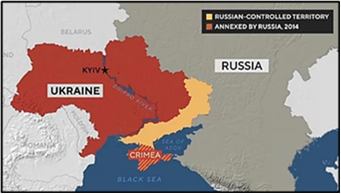
As we addressed in our previous ATWs, the likelihood of a near-term deal to end the war in Ukraine is extremely low. While peace plans are being discussed with the Russian and Ukrainian delegations, as well as the EU, there has been little optimism that Russia will agree to the new terms being discussed. However, while there has been some movement by Zelensky regarding NATO membership (though he also said he would not amend the constitution), any concessions here would be in exchange for NATO-like security guarantees that would have to be approved by the U.S. Senate. At the center of the current issue is land in the Eastern Donbas that Ukraine still controls. Russia’s position is that if the land is not given to them now, they will just continue to fight and take the territory militarily. Meanwhile, there has been some concern related to the funding of the Ukrainian military in the new year. However, last Thursday, the EU announced a plan to loan Ukraine $105 billion backed by the EU budget. There was significant push back by several EU members at the 11th hour regarding the use of frozen Russian assets, but this is still being framed as a win because it will fund Ukraine for the next two years. This war will continue into 2026, and we will have to see if the new funding for Ukraine and sanctions pressure on Russia will bring Putin back to the table.
“The key players in the 2026 peace agreement negotiations remain Vladimir Putin and Donald Trump. The peace talks are expected to extend well into 2026 and likely into 2027 due to a significant gap between Trump’s urgency for a deal and Putin’s increasing inflexibility. Russia continues to demand substantial territorial concessions and gains beyond the current battlefield, while Zelensky reiterated last week that Ukraine would not amend its constitution to remove NATO aspirations and consistently refuses to withdraw from the Donbas region. This situation points to a fundamental negotiating impasse, with the conflict likely to continue well into 2026. Putin’s support among the Russian populace remains steadfast, with a slight majority favoring peace talks but opposing territorial concessions. He is confident in winning the war and believes he can sustain Russia’s military economy in the long-term. The Ukrainian people desire peace but strongly oppose ceding their lands. These factors contribute to a pessimistic outlook for a near-term peace agreement. Putin perceives that Ukraine is not ready for a peace agreement on his terms, signaling his intention to pursue further military gains. What could alter this prediction? Major shifts on the battlefield that convince both sides they cannot achieve a decisive victory, increased economic and political leverage on Moscow, and a stronger U.S./European framework that compels Russia to take the negotiations seriously. Without these changes, there is little optimism for ending the conflict in 2026.” – General Robert Walsh
“Any ceasefire will be temporary as Putin’s military rests, refits, and rearms. Putin has not changed his maximalist demands for territory, the end of the Zelensky regime, prohibitions on Ukraine joining NATO and possibly the EU, the weakening to insignificance of the Ukrainian military, and no effective security guarantees from outsiders. Zelensky might be willing to forgo NATO membership as he mentioned this past week, but the rest so far remains unacceptable. Open source journalism remains so poor that it is hard to tell the actual state of fighting along the Line of Contact. However, Russian forces have only gained ~1% more Ukrainian territory in the last 24 months at enormous manpower and equipment costs. Neither Russia nor Ukraine have fully mobilized their manpower that would be necessary to achieve a strategic breakthrough. Meanwhile, the EU remains divided over using frozen Russian funds to fund Ukrainian defense efforts or reconstruction. Look for the war to drag on well into next year.” – General Rick Waddell
“Well, are we surprised with the EU’s failure to claim the frozen Russian assets? The EU missed an opportunity to deploy those assets to improve and expand the continent’s security posture. This hesitation by the EU throughout Russia’s reckless and lawless war against Ukraine unfortunately presages the way ahead. Europe wants Russia to ‘pay for’ its malfeasance and its political solidarity is unquestioned. Sadly, practical application of force and a willingness to accept risk are missing. Deterrence across all elements of power matters. In this case, economic inaction will inhibit military success in the sustainment of Ukraine’s incredible resilience over the course of four years.” – General Spider Marks
“Russia will unlikely compromise on its maximalist goals in 2026. The possibility of a ceasefire remains extremely low even with the compromising positions presented in the U.S. plan which favors Putin. Russia can continue fighting through 2026 with marginal costs and marginal declining efficiency. The recent Trump National Security Strategy, which does not characterize Russia as an adversary, reinforces Putin’s strategy that time is on his side, he can influence diminishing U.S. support for Ukraine, and wear down NATO commitments over the next year. While Putin does not unequivocally need economic health or popular support to sustain the war in 2026, there are several indicators to track that will impact, over time, Putin’s prosecution of the conflict. Specifically, cash flow (oil prices), ammunition (indigenous and North Korean), Chinese dual-use technology support, recruitment (sustaining replacements without a national mobilization), and oligarch support. While interest rates and inflation remain problematic, they are not near-term risks to force Putin to consider negotiations but will continue to create stress on Russia’s economy. Putin will also continue to sustain his grey zone conflict with increasingly aggressive actions along and across borders, through cyber-attacks, and disinformation campaigns to challenge Western resolve. Putin will remain politically stable throughout the next year. However, as is the case with autocratic regimes, they remain stable until they are not.” – General Robert Ashley
“Europe is the X-Factor. Ceasefire diplomacy in Ukraine is gaining momentum, but the single most consequential variable in 2026 will be Europe’s cohesion and staying power. This has always been a larger war with Europe for Putin. The United States wants speed, but Russia continues to use battlefield leverage to shape terms. Europe, more than Washington, is being asked to carry the long game. Last week, the EU agreed to a roughly €90 billion two-year support package for Ukraine, signaling resolve while exposing persistent internal friction over burden-sharing, legal authority to use frozen Russian assets, and tolerance for prolonged commitment. Even under a softened ‘security guarantee’ construct, sustained Western involvement will make Moscow uneasy, increasing the likelihood of hybrid pressure — non-kinetic actions such as cyber-operations, energy and infrastructure disruption, disinformation, election interference, and economic coercion designed to raise costs without triggering open conflict. Given Europe’s uneven track record managing such pressure, its performance in 2026 may determine whether any ceasefire holds or degrades into sustained, Europe-wide instability. The most likely 2026 outcome remains a fragile ceasefire that freezes the conflict without resolving sovereignty and carries persistent risks of miscalculation.” – Shelby Pierson, Former Director of Analysis, National Geospatial-Intelligence Agency
“There will be no peace in Ukraine unless Putin stands to achieve his goals. Any agreement that leaves Ukraine militarily viable, firmly aligned with the West, and protected by credible deterrence is a non-starter. The key sticking point in current talks is the shape of ‘security guarantees’ for Ukraine. Even if Ukraine relinquishes its bid for NATO membership, security guarantees by Europe and/or the U.S. still look too much like Western alignment for Russia. Putin has consistently pursued his goals throughout the four-year campaign; for him to accept anything less would be a strategic failure. We underestimate Putin’s tenacity if we believe he is willing to compromise in these core areas. Similarly, we should not underestimate Putin’s tolerance for Russian suffering in order to achieve his aims (remember, this is a country that solemnly commemorates the loss of 27 million people in the Great Patriotic War, a number that dwarfs the WWII fatalities of any other nation). In short, despite tremendous bloodshed, the pressure of sanctions, and the strains of a wartime economy, Putin’s incentives for a ceasefire are much less than ours. At this point, we want peace more than he does, and any agreement that doesn’t plausibly neutralize or significantly degrade Ukraine’s military, ensure its political realignment away from the West, and provide irreversible control (if not recognition) of Russia’s territorial gains is a non-starter.” – General Karen Gibson
“Looking through European eyes, despite Trump pushing NATO and Europe to take more responsibility and Germany (at last) committing to significant spending on defense, Europe (and the EU) is still a mixed bag of reactions both to the practicality of increasing effective defense spending, and to the continued Russian threat, with those further East and closest to Russian geography paying most attention. The UK talks of commitment to raise its game, but practical deliverability (if not honest affordability) is limited. Putin has the established and stable methodology of a ravaged wartime economy, yet is producing hundreds of tanks a month. Europe is trying to bolster its fractious political authorities by spending on voters, while Trump signals the likely reward to Russia for a settlement at a cost to Ukraine, and the EU stands almost powerless to offer an alternative.” – Admiral Sir George Zambellas
Will the Ceasefire in Gaza/Lebanon Hold in 2026?
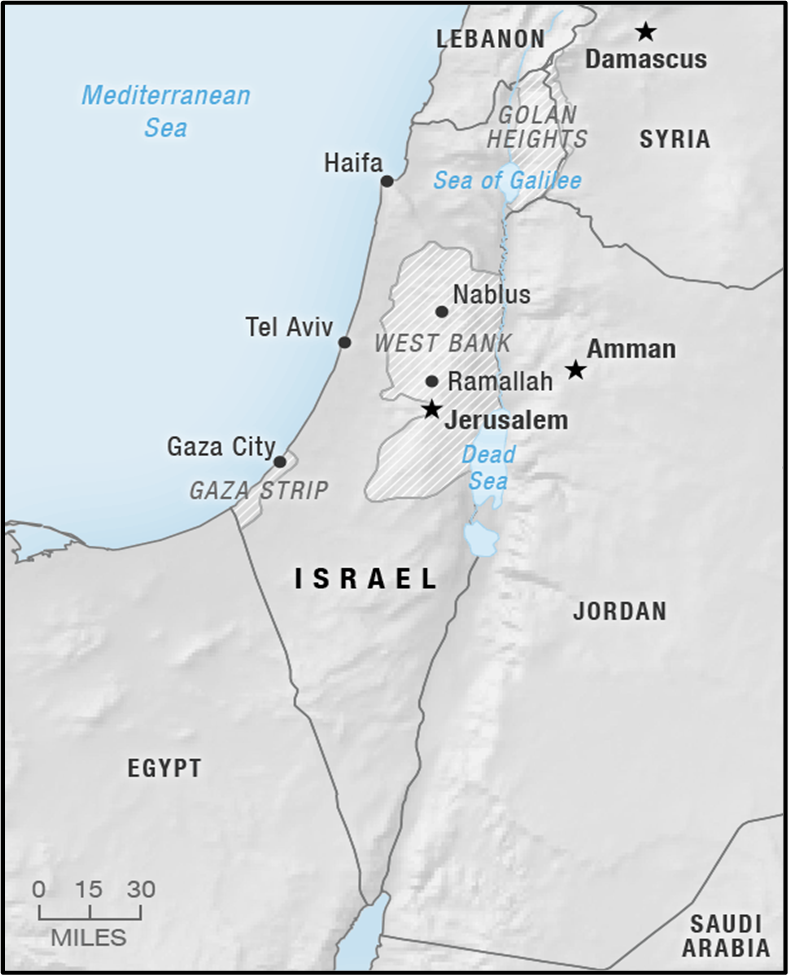
While the ceasefire is (tenuously) holding in the region, pressure is mounting on how Israel will move the peace process forward. Last week, the IDF took out another high-ranking Hamas leader in Gaza (weapons chief Raed Saed). Hamas has made it clear that they will not disarm without an agreement paving the way toward a two-state solution, which is a non-starter for Israel at this time. So, bottom line here is that while the IDF recognizes the ceasefire, it will continue to take out targets of opportunity that are deemed to be threats to the security of Israel. This also applies to Hezbollah, where last month the IDF killed its de facto chief of staff, Haitham Ali Tabatabai, in Beirut. This is the new normal in the region, and the hard part will be continuing to execute this strategy, while at the same time, encouraging an international stabilization force to come into Gaza, and commence reconstruction in Phase Two of the process. Finally, the concern over the Iranian nuclear program and its long-range missile production capabilities is not going away. The 12-day war may be over, but there will likely be further strikes on Iran should the intelligence reflect that it is making progress on both of these fronts in the new year.
“The continued viability of the U.S.-backed ceasefire in Gaza and Lebanon hinges on the deployment of an international force, the disarmament of Hamas, and the Lebanese government taking responsibility for disarming Hezbollah. The most significant obstacle to achieving lasting peace in 2026 is the disarmament of these two military organizations, both of which oppose the existence of Israel. Hamas refuses to disarm unless a Palestinian state is established, a condition that Israel rejects. Hezbollah, already on a dedicated rearming path, is similarly resistant. Recently, Hamas indicated a willingness to freeze or store arms under international oversight rather than fully disarm, a proposal that Israel completely opposes, insisting on complete demilitarization. While the peace initiative in Gaza has garnered more international support than previous efforts, it still lacks the structural guarantees necessary for success, such as a comprehensive political agreement and disarmament.” – General Robert Walsh
“The situation is likely frozen where Hamas refuses to disarm while it contends with any dissenting forces in Gaza. Israel will continue to strike Hamas targets of opportunity but will not withdraw to the next phase line unless and until Hamas commits to disarm. Any reconstruction will occur behind Israeli lines and thus will be minimal. U.S. diplomacy will stay engaged trying to get the parties to adhere to the 20-point agreement. If Iran can surmount its collapsing currency and lack of water to allow Tehran to re-start long-range missile fabrication, Israel is in the position to strike again, given its degrading of the Iranian air defense systems last June. To prevent this, look for Iran to seek new air defense systems from Russia and China as a key indicator.” – General Rick Waddell
“The ceasefire in Gaza will not hold in 2026. It is not holding now and will increasingly fray preventing any serious discussion of, let alone potential for, a two-state solution. Hezbollah will continue to rearm as Iranian supply lines remain generally intact and Syrian government forces will be unable to effectively intervene. Hezbollah remains Iran’s most resilient and persistent force in the Levant. Iran will do all that is required to sustain it. Israel is emboldened by its wholly successful and relatively unopposed air operations within Iran. It will take advantage of this newfound freedom of action to periodically strike Iranian long-range missile and air defense assets at times and places of their choosing. Some of these strikes may be acknowledged. Many will not.” – General David Beydler
“Whether or not a ceasefire ‘holds’ is entirely in the mind of the participants. Whatever the actual level of violence, a ceasefire holds if it is deemed by the respective parties to hold. I think in this case, the Gaza and Lebanon ceasefires will ‘hold’ because it isn’t in any of the parties’ interests to say that they aren’t. In Gaza, where implementing Phase Two of the plan will run headlong into the vexed question of Hamas ‘disarmament’ and the still nebulous concept of a peacekeeping force, I think we will see a continuation of the current situation where there is a notional ceasefire, but Hamas remains extant and Israel continues to take military action where it deems necessary. The same is the case in Lebanon. Neither side has an interest in resuming full-scale hostilities, but Hezbollah will attempt to reconstitute, and Israel will act to counter it. Finally, with regards to Iran, I do think that there is a genuine desire to prevent Iran from either developing a nuclear weapon or reconstituting its long-range missile stockpile. Any concerted effort to do so will very likely result in resumed action from Israel and, likely, the United States.” – Neil Wiley, Former Principal Executive, Office of the Director of National Intelligence
“The ceasefire in Gaza will hold in 2026 despite Israel continuing targeted kinetic activity to eliminate Hamas operatives as Hamas continues to delay or ignore its commitment to disarm and relinquish its role in the governance of Gaza. Hamas’s failure to live up to its commitments will delay the ability of the International Stabilization Force (ISF) to achieve its objectives in as timely a manner as possible. Palestinian Authority reform will also progress very slowly, and this will complicate implementation of the long-term objectives of the ceasefire. Without Hamas disarming and the ISF proving itself capable of controlling and maintaining security and stability in Gaza, the IDF will not withdraw beyond its current positions in Gaza. The good news is that short of significant Hamas operations against Israel the ceasefire will hold, increased humanitarian aid will flow (although slower than planned), and efforts for a long-term resolution of the conflict in Gaza will continue. Likewise, in Lebanon the ceasefire will muddle along.” – Joe Zacks, Former CIA Deputy Assistant Director for Counterterrorism
China/Taiwan Tensions Continue in 2026?
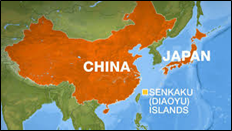
As we addressed in our previous ATW and recent podcast, last month, Japanese PM Takaichi made a few remarks around the topic of Taiwan that has resulted in a significant blowback. Following the remarks, China took economic action and even went as far as conducting a joint patrol with Russian bombers in the region. In addition, a few days before this patrol, Chinese fighters locked on Japanese fighters with fire control radar in a dangerous encounter. It is important to note that China is Japan’s largest trading partner, accounting for over 20% of its total trade, so it will be difficult for Japan economically if these tensions continue into the new year. While the Japanese PM has refused to retract her comments, Xi made a call to President Trump, and Trump then followed up with the Japanese PM in an effort to bring down the rhetoric. However, the U.S. is still a steadfast partner of Japan and signed off on an $11 billion arms deal for Taiwan last week, making it clear that while strategic ambiguity is still the policy regarding Taiwan, facilitating arms sales to our regional partners will continue.
“The ongoing engagement between the U.S. and China over trade has led to a more stable economic relationship. President Xi recognizes the importance of a trade deal to President Trump, yet the current partial agreement remains fragile and lacks comprehensiveness. Xi perceives Trump’s desire for a favorable deal for the U.S. as an opportunity to influence U.S. policy on Taiwan in Beijing’s favor. Taiwan remains central to China’s national policy and the longstanding One China policy, with Beijing insisting that the U.S. accept it and discourage Taiwan’s independence. Beijing has leveraged Japan’s new Prime Minister Takaichi’s more aggressive stance on Taiwan to attempt to drive a diplomatic and strategic wedge between the U.S. and Japan, knowing China’s leverage in the trade negotiations. While economic progress between Beijing and Washington may continue, the U.S. remains committed to Taiwan’s defense, as evidenced by last week’s announcement of an $11 billion arms sale to Taiwan. Meanwhile, China continues its military coercion to deter Taiwan’s move towards independence. Tensions over Taiwan will remain high and are expected to persist in 2026.” – General Robert Walsh
“I absolutely agree that strategic ambiguity will be the path forward as it has been for decades. This whole region will be business as usual in 2026, while we get as much trade balance as we can. I would look for Japan and Philippine relations to increase this upcoming year.” – General Brian Cavanaugh
“The U.S./China discussions will remain focused on trade. China understands Japan is a treaty ally and our position relative to Japan will not change. While behind the scenes we may be asking to tone down rhetoric, I don’t see this occurring in the public domain. I also do not see our discussions relative to Taiwan changing over time. The idea of ‘strategic ambiguity’ goes back to the Taiwan Relations Act of 1979 and will likely continue to be the best approach from a U.S. perspective to any Taiwan specific discussions.” – General Lewis Craparotta
“The U.S. will approach relations with China in 2026 with a pragmatic realism. As outlined in the 2025 National Security Strategy, the U.S. will continue to build up military capability with a focus on defending the Western Hemisphere but an eye on the pacing challenge, China. The U.S. will continue to seek resiliency through less reliance on international manufacturing and supply of critical or rare earth elements, while improving energy independence and its military industrial complex. This will be done through a delicate balance of trade with China and other nations in order to minimize financial impacts to U.S. markets and companies.” – General Steve Basham
“I think the administration will lean into strategic ambiguity while it negotiates a trade deal with China. As a result, I think we will see continued dissonance between U.S. military actions and diplomatic/economic actions at least through April when Trump is scheduled to visit China. China will continue to be emboldened in pursuing its objectives especially since Trump took Xi’s call regarding Japan and acted on his request. I think China also sees significant opportunity to strengthen its regional position given the U.S. prioritization of and focus on the Western Hemisphere.” – Admiral Kelly Aeschbach
Will Russia and China Expand Their Footprints in Africa in 2026?
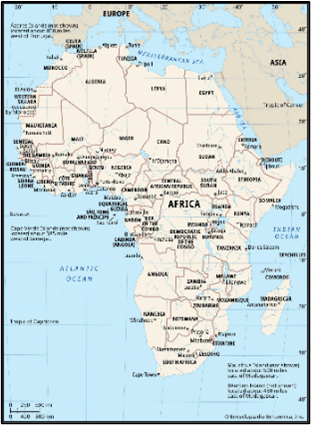
Africa will continue to be a focus of our team entering the new year as there is significant opportunity for the U.S., as well as challenges being mounted by competitors, namely Russia and China. In the Sahel region, the counterterrorism mission is being recalibrated to focus on more targeted joint-operations with partner nations. However, the overall strategy of the administration appears to be transactional in nature as demonstrated by the engagement in the peace deal between the DRC and Rwanda. A key result here for the U.S. was a deal to buy rare earth minerals from both countries. While the U.S. was successful in getting ahead of its competitors in this instance, other areas such as Nigeria are of concern. China signed a $2 billion maritime investment deal this year, in addition to a $650 million infrastructure deal for roads. These deals follow the 2023 port deal which was part of the Belt and Road Initiative. In Sudan, there has been talk of a 25-year deal for a Russian base in the Red Sea in exchange for weapons to be used by government forces in the civil war. In Nigeria and Sudan, there could be ways for the U.S. to expand its influence, such as by continuing to support Nigeria with security and humanitarian assistance packages and engaging in the Sudanese peace process to try to end the war and prohibit Russia from ever building the base. As both China and Russia expand their influence on the continent, it will be key for the U.S. to refine its strategy to stay ahead of the competition and advance U.S. interests in the new year.
“Russia continues its military support to African countries, while China focuses on economic development and resource extraction through its One Belt and One Road Initiative. China’s commercial and transactional policies in Africa have led to their dominant influence, which is crucial for their technological advancement under the Made in China 2025 plan. As a result, the U.S. faces a competitive disadvantage in supply chains amid the ongoing tech war. To counter this growing influence, the U.S. is shifting its strategy towards economic and security interests. Traditionally, U.S. foreign policy was aid-focused, but the new strategy prioritizes critical minerals, commercial partnerships, and peace through trade to counter China’s influence and Russia’s disruptive military presence. This new U.S. strategy aligns with the aspirations of African nations, which is why there is a steady stream of African leaders visiting Washington. However, the U.S. is lagging in this ‘trade not aid’ approach, and 2026 is expected to see only modest progress in challenging Beijing’s dominance.” – General Robert Walsh
“China can always offer direct monetary inducements to leaders alongside roads, rail, and ports to enable extractive industries and agriculture to serve Chinese demand. China can also offer cheaper and quicker telecommunications and data infrastructure (that always comes with data security risks). The U.S. and the rest of the West will still have the intellectual and financial capital for much larger investments than China can provide as long as those investments can earn a commercial return, which will require some of the African states to adopt investment-friendly processes.” – General Rick Waddell
“Three elements are necessary for burgeoning nation states to grow and mature: security, economy, and governance. While pockets of excellence exist across the African continent (South Africa, Kenya, Morocco, Egypt, etc.), the Trans-Sahel is rife with security and governance challenges. The Trump administration’s condemnation of the slaughter of Christians in Nigeria seemed to portend a more active role for the U.S. military and economic support, but the challenge in Africa is always distance and lines of communication.” – General John Evans
“In Africa, I think we will continue to see our military focused on the big picture in assisting regional partners in building their own capacity to address their security challenges and provide a safe and secure environment for their citizens, but our #1 military focus will be centered towards terrorist groups that have the capability to potentially execute operations in the U.S.” – General KK Chinn
“Russia will remain focused on resource extraction, regime survival partners, diplomatic backers, and opportunities to curb Western influence, framing itself as an anti-colonial alternative. Russian activities tend to be tactically disruptive but strategically shallow, leveraging low-cost tools like mercenaries and arms (hint: wherever you see Russian military contractors, assume there are critical minerals nearby). The good news is that Russia lacks the resources for long-term structural influence. Expect them to stay active in the Sahel while leveraging potential opportunities to secure ports, bases, or access on the Red Sea, much as they established in Syria under the Assad regime. In fact, the whole Red Sea/Horn of Africa region (Sudan, Ethiopia, Eritrea, Djibouti) is worth watching in the context of the broader Arabian Peninsula and Mediterranean (one reason the UAE is so active in Sudan). China, on the other hand, is structurally embedded in African economies. Its influence is broad, durable, and capital-intensive. China’s priorities remain access to resources, supply chains, and markets, as well as long-term political influence. Expect continued BRI projects and positioning for critical minerals, processing, and transportation infrastructure.” – General Karen Gibson
“China is almost certainly going to try to continue to expand its footprint in Africa in 2026, and it is likely to find a receptive audience. That being said, most African leaders cautiously seek to avoid becoming overly dependent on one external power, suggesting that there is room for the U.S. to engage and to increase its trade and business. Beijing sees Africa as a source for allies and votes in international organizations on important issues like Taiwan and the South China Sea. Africa’s markets and resources are increasingly important to fueling China’s economy. African imports of Chinese goods grew by 25% this year, according to a Bloomberg analysis. Most of Africa’s exports to China are critical minerals and oil. Russian engagement is likely to be highly dependent on the trajectory of the war in Ukraine, but Moscow will seek to grow its role if possible.” – Linda Weissgold, Former CIA Deputy Director for Analysis