
Academy SITREP – Update on U.S.-Israeli War with Iran
What has Happened:
- Following up on our webinar on Sunday, we are continuing to keep a close eye on U.S. and Israeli operations against Iran.
- President Trump has laid out his objectives for the war which include destroying Iran’s missile capabilities, annihilating its navy, ending its nuclear ambitions, and stopping it from arming militant proxy groups.
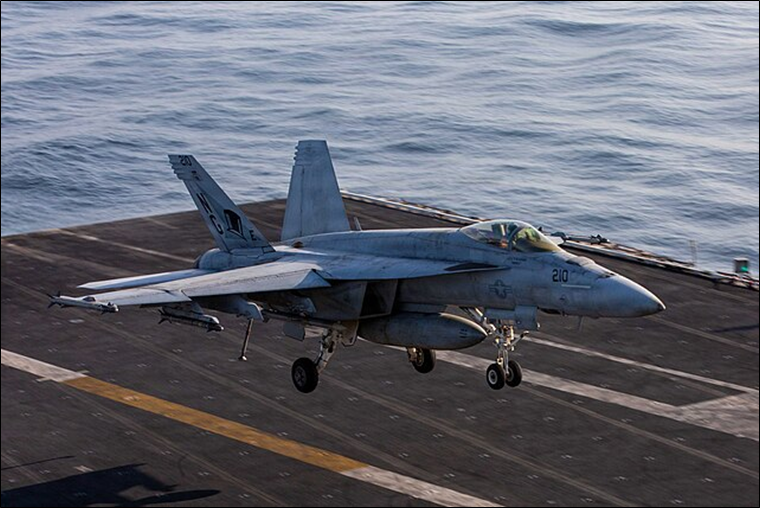
- The U.S. campaign could last four to five weeks, has included fourth- and fifth-generation fighter jets, long-range bombers, Navy destroyers, and other assets to also attack Iran’s ballistic missile sites, ships and submarines, anti-ship missile sites, and air defense systems, hitting more than 1,000 targets in the first 48 hours.
- Iran suffered a massive blow on Saturday after Israeli forces inflicted heavy damage on the compound housing Khamenei, killing the supreme leader and nearly 50 other regime officials.
- Tehran has followed through with its threats of retaliation, starting on Saturday, by firing hundreds of ballistic missiles and nearly a thousand attack drones at Israel and U.S. bases in the region, including in Kuwait, Jordan, Bahrain, the United Arab Emirates (UAE), and Saudi Arabia.
- Iran-backed Hezbollah in Lebanon also fired missiles at Israel, which responded with its own strikes.
- An Iranian Revolutionary Guard senior official said yesterday that the Strait of Hormuz is closed, and Iran will fire on any ship trying to pass, but President Trump announced today that the U.S. Navy will begin to escort tankers through the Strait if necessary.
Why it Matters:
“I categorize targeting efforts of the U.S.-Israeli air campaign as follows: 1) Integrated Air Defense Systems – an essential effort to establish air superiority and reduce risk to our aircraft. Largely successful. 2) Command and Control, including ISR, HQ, and comms, to degrade Iranian decision making and disrupt military coordination. Significant success, but the effort is not entirely complete, as we see with Iran’s continued retaliation. Much of what’s occurring now is likely execution of preplanned ‘Armageddon response’ packages under delegated authority. 3) Leadership targeting. Substantial decapitation here, but the death of the Ayatollah and key leaders has not translated into operational paralysis, particularly in a system built on contingency planning and ideological resistance. 4) Retaliatory capabilities, especially mobile missiles, drones, and naval assets. These are more difficult to destroy due to their mobility and tremendous volume. 5) Security and regime coercive infrastructure. These are badly damaged, but the security establishment remains coherent and functional. 6) Nuclear adjacent targets. Strikes have been limited and calibrated.
So, what have we achieved? Significant suppression of Iranian air defenses, significant damage to fixed facilities, meaningful degradation of C2 and intel nodes, substantial leadership decapitation, and significant damage to fixed and military infrastructure. That said, we have not eliminated the drone and mobile missile threats – more challenging, as I highlight above – and we have not fully neutralized Iran’s ability to execute pre-planned retaliation strikes. We have not collapsed the security establishment, and we have not eliminated the ability of proxies to act regionally.
I foresee major military operations continuing until retaliation falls below an acceptable threshold, mobile missile and drone inventories are sufficiently eliminated, and a credible authority emerges capable of negotiating or capitulating. Leadership decapitation complicates this final point. Who speaks for Iran? Who can credibly negotiate? A vacuum at the top may prolong rather than shorten the conflict.
I characterize risk in the following areas: 1) Continued regional retaliation – drones, missiles, rockets, proxies. 2) Maritime threats in the Gulf and, should the Houthis jump in, possibly the Red Sea/Suez Canal. 3) Possibility of cyber-attacks, which could also affect the U.S., or sleeper cells globally. 4) Eventually, a humanitarian disaster in a nation of over 90 million people, with second and third-order regional effects.” – General Karen Gibson
“The United States is in the early stages of an air and maritime campaign against a fanatical adversary that is unlikely to surrender or yield quickly to U.S. pressure. History offers a relevant parallel: during World War II, both Japan and Germany continued fighting until they faced catastrophic defeat. In both cases, victory required extensive ground campaigns. By contrast, the United States currently has no plans to deploy ground forces while the Iranians are showing no signs of capitulating. General Caine has stated that the mission is ‘to protect and defend ourselves and our regional partners, and to prevent Iran from projecting power beyond its borders.’ Similarly, Secretary of War Hegseth described the operation’s objectives as to ‘destroy the missile threat, destroy the navy, and prevent nuclear development.’ However, both the mission statement and these objectives face significant challenges, particularly in countering missile and drone threats. Although today’s technology is far more advanced than it was during Operation Desert Storm, the United States struggled to locate and neutralize mobile missile launchers. Iran possesses a vast inventory of missiles and launch platforms, and its missile campaign could be sustained for an extended period. Moreover, Iran’s radical leadership may be willing to accept extreme risk and cost. The longer Iran continues its attacks, the greater the strain will be on U.S. partners, U.S. political support, and global markets—especially if there is not a rapid and decisive conclusion. U.S. leaders are preparing audiences for the challenges ahead.” – General Robert Walsh
“I assess that Operation Epic Fury will have to continue for likely weeks in order to complete the significant degradation of the following: Iran’s offensive capabilities, especially as related to its ballistic missile and drone launch capabilities and stockpiles, the IRGC command and control, the remnants of its nuclear program and associated sites, and the Iranian Navy.
Hezbollah entering the conflict is a bonanza for Israel because it can settle unfinished business and pressure the Lebanese government to take increasingly harsher measures against a significantly weakened Hezbollah. I see Hezbollah inserting itself into the conflict as a strategic error on its part and not a game changer for the objectives of Operation Epic Fury.
Keeping an eye on the Houthis is important so that there be no measurable disruption to shipping and transit of the Bab el-Mandeb Strait. The Houthis are a fanatical group that is aligned with Iran but also exercise a large measure of independence. Despite their public proclamations, the Houthis’ response has been generally muted although not non-existent, especially related to Red Sea and Gulf of Aden transit.
It is also critical to be attentive to Iranian asymmetric capabilities, especially as related to cyber warfare and its activating terror networks. I’m more concerned about its cyber warfare capabilities than its turning to terror networks. Nonetheless, it is critical that the U.S. and our allies remain vigilant in this regard. I assess that markets may react sharply to a significant cyber or terror attack.
Patience will be critical over the next few weeks. It will likely take a while for a new Iranian leadership structure to emerge from within the existing government, and it will take even longer to determine if such leadership is acceptable to the Iranian populace and the U.S. and its allies. Reports from both Iran and Israel indicate that the meeting of the Assembly of Experts responsible for appointing the next Supreme Leader was attacked today. This will certainly set back the regime’s succession planning. I would look for defections from the IRGC and conventional Iranian military (Artesh) to be a significant indicator of a collapse of the regime. I have not seen any evidence of this having occurred.” – Joe Zacks, Former CIA Deputy Assistant Director for Counterterrorism
“I think it’s too early to judge the overall success of the operation. On the positive side, we have clearly been very successful in the early decapitation of regime leadership. It would appear that we have also been successful in establishing air dominance, and in degrading or eliminating the Iranian conventional naval threat. In short, we can operate around, and over, Iran largely as we wish. While there has been some Iranian proxy activity, none of the proxies appear to be fully committed yet. Diplomatically, things are, so far, largely positive. The Gulf States continue to appear to remain on-side, the Europeans are predictably divided but not destructively so, and the peer adversaries lack the ability to meaningfully interfere.
On the other hand, Iran remains in the fight. It is still conducting attacks against regional targets, and it is difficult to gauge the degree to which Iranian missile and drone capability has been degraded. Some kind of command and control of the missile forces remains operational. As yet, the security forces appear to remain loyal to the regime and there does not appear to be any developing internal opposition.
I think we are now entering the grinding phase of an operation which has probably been planned to last several weeks. High-priority targets have mostly been engaged. Operations settle into the grim rhythm of the Air Tasking Order, wherein pre-planned targets are serviced, and intelligence, operational necessity, and fortune drive the identification of emerging threats and opportunities. All this will work towards some kind of desired end state. Whatever the ultimate desired goal is, the proximal aims will be to degrade Iranian retaliatory capability to some acceptable level, and to tear up the nuclear program for good. The broader goal is clearly to bring about a change of regime. It’s too early to judge strategic success. In order to prevail, the regime just needs to survive. We win if something more favorable replaces it. I leave it to the economists to judge the impact of energy attacks and shipping disruption. My thought would be to consider the impact that LNG disruption will have on the European economies given that they’ve already cut themselves off from Russian energy.” – Neil Wiley, Former Principal Executive, Office of the Director of National Intelligence