
Academy SITREP – U.S. and Israel Strike Iran
What has Happened:
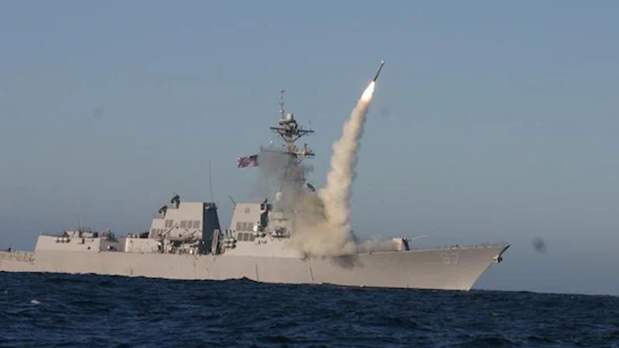
- Early this morning, the U.S. and Israel commenced major combat operations against Iran.
- Operation Epic Fury is expected to last for several days, and possibly longer.
- These strikes come following the 3rd round of nuclear talks that did not result in a deal.
- The office of Iran’s Supreme Leader, and the presidential office in Tehran, were reportedly targeted by Israeli strikes.
- The primary focus of the American strikes for the moment is military targets in Iran.
- Besides its nuclear facilities, Iran is believed to have more than 2,000 missiles (primarily short- and medium-range ballistic missiles) that threaten Israel and American forces.
- Iran retaliated by firing a barrage of missiles and drones at Israel and U.S. bases throughout the region, including ones in Qatar, Kuwait, the United Arab Emirates, and Bahrain.
- President Donald Trump called on Iranians to “take over your government.”
Why it Matters:
“Early news is always suspect, yet the reports say that Israel attacked Iranian leadership. The U.S. is focused on suppressing Iranian air defenses and hitting targets posing ‘an imminent threat.’ Meanwhile, Iran has retaliated against Israel as well as U.S. bases in Jordan, Kuwait, Bahrain, the UAE, Iraq, Qatar, and Saudi Arabia (if press reports are accurate). The press is also reporting that this operation will last for days at least. The President’s long statement indicates that his plan is to thoroughly destroy Iranian military capabilities, including the Iranian Navy. It’s too early to tell if Iranian leadership suffered any casualties, or the level of battle damage elsewhere. By targeting Iran’s political leadership, this becomes an existential threat to the regime. What is now obvious is that months of combined military planning occurred with Israel (as expected) and the U.S. expended significant diplomatic effort with the Arab nations to stage and sustain our deployed assets, and to launch the attacks, especially given the inevitable Iranian kinetic response. What remains to be seen: 1) Will Iranian reprisals cause any significant damage or casualties to Israel, the Arab nations, or the U.S.? 2) Will Iran extend its reprisals beyond the Middle East, using its proxy networks? 3) Will the U.S. or Israel target Iran’s oil production and exporting capabilities? 4) Given the existential threat to the regime (as the regime will see it), will Iran seek to close the Strait of Hormuz? 5) Will the Arab nations continue to support U.S. and Israeli actions? 6) Will U.S. allies in Europe and Asia support or condemn these actions (even if secretly happy about the operations)? 7) Will Russia and China do anything other than complain diplomatically? 8) Will the Iranian military respond to the President’s call to lay down their arms and turn against the regime, and will the Iranian people heed the President’s call to rise up against the regime?
As a final note, this is now the ninth U.S. presidential administration that has had to deal with the theocratic regime’s actions and threats. Maybe enough is enough.” – General Rick Waddell
“Thinking about what’s next and potential goals of this military campaign, I see a range of options. The first, and easiest militarily, would be to stop after these opening blows and force Iran back into talks in a weaker posture than ever. Trump tied the strikes to the lack of progress in negotiations, but he hasn’t explicitly stated ‘this will stop when you agree to X,’ so I judge this as less likely. A broader option would be a weeks-long campaign to cripple Iran’s ability to fight, exerting sustained pressure until Iran’s retaliatory capability is significantly degraded, if not eliminated. Broader options include decapitation and concentrated strikes against the Iranian decision-making apparatus. On the farthest end of the option range, we’d see an overt campaign to accelerate the regime’s collapse, likely in the form of relentless strikes against broader targets coupled with messaging to the Iranian people. In addition to the administration’s public statements and policy pronouncements, the next 24-72 hours should tell us a lot about the direction this is headed. Are the strikes focused on missile launchers, C2, air defense, and strictly military infrastructure? Or do they include sustained hits on leadership and Iran’s internal security apparatus?” – General Karen Gibson
“President Trump’s announcement earlier today identified Iran’s military and nuclear programs as targets and stated that the broader intent of the attacks was to induce a change in Iran’s government. Regime change represents a major escalation and marks the first time the U.S. has explicitly stated this as an objective. He is committed to regime change and has offered an olive branch to the Army leaders as a first step to turn against the regime. Achieving the military objectives is significantly more feasible than accomplishing the political objective of regime change. It is an exceptionally difficult goal to achieve through air and naval operations alone, and would depend heavily on the Iranian population mobilizing against its government. The U.S. and Israeli militaries are the most experienced and capable forces in the world, and the operational goals against Iran’s military and nuclear infrastructure are likely to be met. This operation is not a limited strike, but a campaign expected to last multiple days or weeks. It reflects a shift toward a new generation of warfare characterized by long‑range missile and drone attacks launched from air, sea, and ground platforms and free from using ground forces. Regional escalation occurred with Iran’s decision to target U.S. forces stationed in Gulf partner nations and the Houthis’ stated intent to join Iran’s attacks. At the same time, it provides Gulf states with justification to grant U.S. forces expanded access to operate from their countries to defend against Iranian attacks and, potentially, to conduct offensive operations.” – General Robert Walsh
“Watch for possible Houthi strikes against Arab nations, Israel, and shipping in the Red Sea. Asymmetric terrorist attacks against U.S. diplomatic missions or U.S. entities globally are always in play…especially in Europe.” – General Robert Ashley
“So, the die is cast. We will find out shortly whether the objective is to further damage Iranian nuclear infrastructure and to force an agreement, or something much more ambitious. Early indications suggest the latter, but I’m not sure yet. Further to General Ashley’s point on the Houthis, I think the degree of proxy enthusiasm might be a useful barometer for how much influence Iran retains. If the proxies are lukewarm or just sit this out, it may be that they’re anticipating a post-regime Iran.” – Neil Wiley, Former Principal Executive, Office of the Director of National Intelligence
“I assess that the regime views this as an existential attack as seen by their retaliatory strikes against Gulf countries. I am surprised though that their strikes have not been more intense, and this may be an indication of a limit to their capabilities coupled with our ability to deter a broader strike against our partners in the Gulf. The Iranian regime’s ability to mount strikes against its Gulf neighbors will be an important barometer of its ability to push back in an existential moment. As to what victory for the U.S. will look like — regardless of whether the regime collapses immediately, the Iranian regime will be significantly degraded, especially related to its command and control, its air defenses, and nuclear and ballistic missile programs. The value of its investment in proxies will also be made abundantly clear, and I assess that the ROI on these proxies will prove weak at best. Nevertheless, this is a dynamic military operation that will go on for days and the situation remains fluid.” – Joe Zacks, Former CIA Deputy Assistant Director for Counterterrorism
“From a markets perspective, I will be focused on possible disruption to oil. Either in the Strait of Hormuz (Iran’s doing), or production/distribution facilities in the region (Iranian attacks), or Iranian production/distribution (the U.S. or Israel). The Strait is my primary concern at this stage. Iran attacking other nations’ energy infrastructure seems highly unlikely, and the U.S. would prefer to see oil prices stabilize after this fight is over, so the U.S. is unlikely to target Iranian facilities. So far, no reported damage in the Strait, which is good, and the early rounds of attacks have likely neutralized some of Iran’s capabilities. We will know a lot more by Sunday night/Monday morning, but given the reporting out of the region and what has been priced in so far, expect a muted reaction in markets. Bitcoin is down moderately since the attacks. My working assumption is that Iranian attacks on U.S. facilities in the region will largely be unsuccessful. Let’s hope that remains the case.” – Peter Tchir, Head of Macro Strategy, Academy Securities