
Academy SITREP – U.S. and Iranian Presidents Sign Memorandum of Understanding
What has Happened:
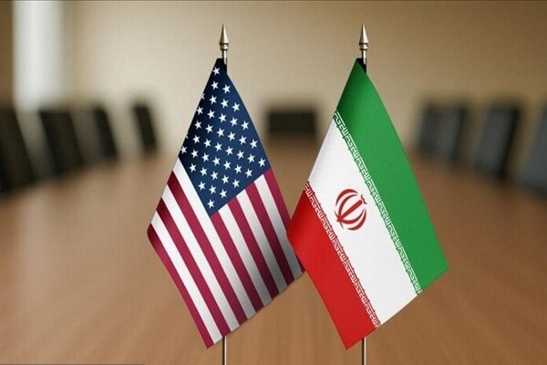
- Yesterday, U.S. President Donald Trump and Iranian President Masoud Pezeshkian officially signed the memorandum of understanding (“MOU”) and the full text was released.
- The MOU establishes a 60-day negotiation period to address Iran’s nuclear program and includes a commitment from Iran not to work towards building or acquiring a nuclear weapon.
- While the agreement outlines an end to military operations in Lebanon, Israel is not a party to the MOU, and it lacks explicit terms for an Israeli troop withdrawal from the area.
- The U.S. Treasury will issue waivers for the export of Iranian crude oil, petroleum products, and derivatives, including all associated banking, insurance, and transportation services.
- In exchange for ending the U.S. blockade, Iran is required to clear mines and reopen the Strait of Hormuz, but concerns remain over Iran’s leverage as the “designated manager” of the Strait’s future commercial traffic.
- The MOU states that the U.S. will “undertake to make fully available” the frozen or restricted funds and assets of Iran, with procedures for their release to be mutually agreed upon during negotiations, which is of concern as Iran could be in a position to receive frozen funds before a final deal is reached.
- The U.S. and regional partners will develop a reconstruction plan for Iran worth at least $300 billion which is contingent on strict Iranian compliance with nuclear dismantling and inspections.
- These funds are not coming from the U.S., but rather the vehicle is structured as a private-sector investment mechanism, largely backed by Gulf Arab states and international companies.
- President Trump emphasized the U.S.-Iran MOU is not a final deal, and he warned the U.S. could resume bombing Iran “if they don’t behave.”
Why it Matters:
“This deal will contribute to economic stabilization but will not automatically bring security transformation. It addresses the most pressing issue: transit through the Strait of Hormuz. What it does not do is fully address security matters or the foundational issues that brought us to the war in the first place (nukes, missiles, proxies, and Iran’s destabilizing role). Compared to where we were ten days ago, the deal is a very positive development. Compared to four months ago, the gains are less obvious, since the MOU essentially takes us back to mid-February, albeit with degraded (but not destroyed or eliminated) Iranian military capabilities. The real question is whether the deal can survive implementation as it faces challenges with competing interpretations, implementation, verification, enforcement, and spoilers (the Israel – Hezbollah conflict being the most obvious). We sit at a fork in the road. On one path, we end hostilities, reopen Hormuz, negotiate a stronger nuclear agreement, and improve long-term security. On the other path, we still end hostilities and reopen Hormuz, but Iran drags out nuclear negotiations and may be no less dangerous than before, especially if it retains its missiles and proxies and/or uses new cash resources to rebuild coercive capacity. Regional actors could hedge by shifting away from security alliances with the United States and cutting their own deals with Iran. In a worst-case scenario, Iran emerges as a regional security broker whose interests must be accommodated, especially if reining in the Israel-Hezbollah conflict remains a requirement for progress on other matters. Either of these futures is possible. Neither is inevitable. Iran’s behavior in the weeks to come should indicate which direction we are headed.” – General Karen Gibson
“We are currently in a fragile and potentially reversible pause in hostilities rather than a true ceasefire or peace agreement. What exists today is essentially a statement of intent that provides both sides space to maneuver in both action and narrative while pursuing their respective national interests. While the fighting has stopped, the agreement defers the core strategic issues — including Iran’s nuclear program, highly enriched uranium stockpiles, proxy networks, missile capabilities, and the scope of an acceptable sovereign Iranian defense capability — to future negotiations that are likely to be lengthy, iterative, and extend well beyond the initial 60-day framework. In the near term, neither side appears interested in resuming major combat given the economic costs and broader regional risks, although limited provocations and isolated incidents should be expected. At the same time, regional Arab states will continue assessing a new security environment, evaluating vulnerabilities and threats to critical infrastructure while advancing efforts to diversify supply chains, and developing alternative energy and transportation routes that reduce dependence on the Strait of Hormuz and limit Iran’s ability to leverage the waterway as a strategic chokepoint. If fully implemented, the agreement’s provisions could require a broader regional strategic reset. However, significant questions remain. Iran is already a signatory to the Nuclear Non-Proliferation Treaty, making the real issue less about formal commitments and more about verification, compliance, and intent. Equally unclear is the extent to which Iran will be permitted to reconstitute its sovereign defense capabilities, particularly missile and conventional forces, which many regional actors — including Israel and several Arab states — will continue to view as a potential source of instability and future risk.” – General Robert Ashley
“The cautious optimism that I displayed on Monday evaporated when I read the 14-point proposal. The only real concession made by Iran is the reopening of the Strait of Hormuz. Those international waters should not be held at risk in any event, so there’s no real concession there. I suspect the Israelis will likely comply with Point 1 until after the signing event on Friday. Thereafter, they will conduct operations as they see fit in Southern Lebanon to protect Israeli sovereignty and safeguard Israeli lives. That will likely foul the deal for Iran during the 60-day negotiation period. It’s critical that sanctions remain in place and no reconstruction money is released to Iran during the negotiation phase. If the U.S. has already agreed to lift sanctions effective Friday, then this deal is little better than JCPOA.” – General John Evans
“The 14-point MOU offers a pathway for rapid de-escalation and short-term economic stabilization, including the reopening of the Strait of Hormuz to support global energy markets that are critical to the U.S., its allies, and domestic audiences. However, the agreement achieves these outcomes by trading substantial U.S. leverage for future commitments that remain uncertain and potentially difficult to enforce. While Iran commits to refraining from developing nuclear weapons and to cooperating with international transparency measures, the critical details governing verification, sequencing, and compliance will not be finalized for up to 60 days, introducing a period of significant strategic ambiguity. The primary risk to the United States lies in the front-loaded nature of its concessions. Measures such as lifting the naval blockade, providing sanctions relief, and granting access to frozen financial assets confer tangible and largely irreversible economic benefits to Iran before durable enforcement mechanisms are in place. This asymmetry creates the potential for partial or delayed Iranian compliance while U.S. leverage is diminished. Without clearly defined consequences for noncompliance, the agreement may weaken the U.S. negotiating position over time, particularly given the leverage established following the 39-day bombing campaign. As structured, the MOU carries meaningful risk that long-term U.S. objectives may not be secured despite substantial upfront commitments.” – General Robert Walsh
“An MOU is not the same as a final agreement, and a lot of spoilers can occur in 60 days. This is a classic case of whether the glass is half full or half empty. If you are looking at the MOU through the lens of short-term economic stabilization and setbacks to Iran’s nuclear ambitions, the MOU is positive. If you are concerned about the lessons that Iran has taken on freedom of navigation, its ability to threaten the region with missiles, and the utility of proxies then the glass is looking drained. Hezbollah, which continued to exchange fire with Israel yesterday, is touting the MOU as proof of its continued relevance. Prime Minister Netanyahu, who is already in the midst of a tough campaign season, will be haunted by his promise to not stop fighting until security is assured. Gulf allies, meanwhile, are likely trying to judge the Administration’s continued commitment to the region and just how long U.S. forces will remain engaged.” – Linda Weissgold, former CIA Deputy Director for Analysis
“Overall, I think the agreement is weak and provides significant concessions to Iran while the fine print remains to be negotiated. Many of the points in the agreement suggest we may end up with something less satisfying than the JCPOA. The U.S. has committed to keeping forces in the region until a final nuclear deal is reached but made significant up-front financial concessions. The inclusion of Lebanon in Point 1 is highly controversial in Israel and underscores the divergence in Israeli and U.S. objectives relative to Iran. The agreement prohibits Iran from charging fees in the Strait of Hormuz but does sanction discussion with Oman on creating an administrative regime which could ultimately lead to permanent fees. And the agreement does not specify any further discussion of Iran’s ballistic missile capabilities and proxy network. Given Iran’s propensity for dragging out negotiations, I expect that we will not have a final agreement in 60 days.” – Admiral Kelly Aeschbach